Discoil e durabilità – Redesign di un sistema per ridurre l’inquinamento idrico da idrocarburi
DOI:
https://doi.org/10.69143/2464-9309/18242025Parole chiave:
acqua, circolarità delle risorse, ecodesign, sostenibilità, inquinamento da idrocarburiAbstract
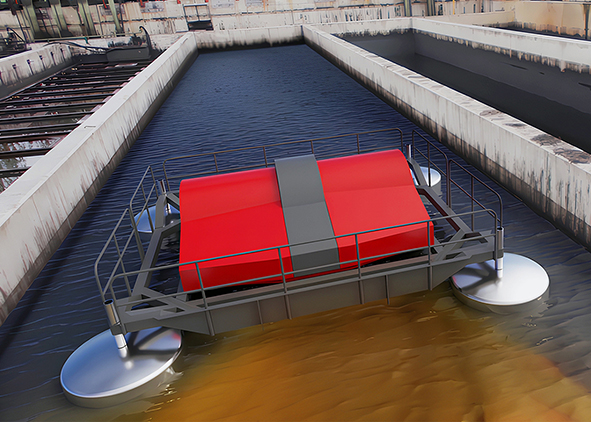
Il contributo presenta gli esiti di un’attività di ricerca applicata, finanziata tramite un bando competitivo e svolta nel 2022-23, per la riprogettazione di un sistema a basso impatto ambientale utilizzato per il recupero di oli e idrocarburi. Il Gruppo di Ricerca ha lavorato sull’analisi, valutazione e riprogettazione in ottica di economia circolare del disoleatore Discoil, macchinario per la separazione degli idrocarburi dall’acqua in impianti industriali o in acque libere, senza utilizzo di sostanze chimiche o di materiali assorbenti. Il risultato offre un caso concreto di applicazione delle strategie di sostenibilità e circolarità nella progettazione di prodotti industriali di particolare complessità, direttamente connessi alla riduzione degli impatti ambientali, e indicazioni metodologiche per la replicabilità del processo.
Info sull'articolo
Ricevuto: 10/09/2025; Revisionato: 18/10/2025; Accettato: 20/10/2025
Downloads
##plugins.generic.articleMetricsGraph.articlePageHeading##
Riferimenti bibliografici
Adetunji, A. I. and Olaniran, A. O. (2021), “Treatment of industrial oily wastewater by advanced technologies – A review”, in Applied Water Science, vol. 11, article 98, pp. 1-19. [Online] Available at: doi.org/10.1007/s13201-021-01430-4 [Accessed 5 October 2025].
Badalucco, L. and Fortuna, P. (2023), “Circular Design Strategies – The dissemination of circular design’s strategies – The Italian case study”, in Officina, vol. 40, pp. 64-73. [Online] Available at: doi.org/10.57623/2384-9029.2023.40.64-73 [Accessed 5 October 2025].
Bakker, C., den Hollander, M., van Hinte, E. and Zijlstra, Y. (2014), Products That Last – Product Design for Circular Business Models, TU Delft Library, Delft.
Bhamra, T. and Hernandez, R. J. (2021), “Thirty years of design for sustainability – An evolution of research, policy and practice”, in Design Science | An International Journal, vol. 7, article e2, pp. 1-17. [Online] Available at doi.org/10.1017/dsj.2021.2 [Accessed 5 October 2025].
Bompan, E. and Brambilla, I. N. (2021), Che cosa è l’economia circolare, Edizioni Ambiente, Milano.
Braungart, M. and McDonough, W. J. (2002), Cradle to Cradle – Remaking the Way We Make Things, North Point Press, New York.
Ceschin, F. and Gaziulusoy, I. (2016), “Evolution of design for sustainability – From product design to design for system innovations and transitions”, in Design Studies, vol. 47, pp. 118-163. [Online] Available at: doi.org/10.1016/j.destud.2016.09.002 [Accessed 5 October 2025].
Charter, M. (ed.) (2018), Designing for the Circular Economy, Routledge, London.
Chiapponi, M. (1989), Ambiente – Gestione e società – Un contributo alla teoria della progettazione ambientale, Feltrinelli, Milano.
Earley, R. (2017), “Circular Design Futures”, in The Design Journal | An International Journal for All Aspects of Design, vol. 20, issue 4, pp. 421-434. [Online] Available at: doi.org/10.1080/14606925.2017.1328164 [Accessed 5 October 2025].
EMF – Ellen MacArthur Foundation (2015), Growth within – A circular economy vision for a competitive Europe. [Online] Available at: ellenmacarthurfoundation.org/growth-within-a-circular-economy-vision-for-a-competitive-europe [Accessed 5 October 2025].
EMF – Ellen MacArthur Foundation (2013), Toward the circular economy – Vol. 1 – Economic and business rationale for an accelerated transition. [Online] Available at: content.ellenmacarthurfoundation.org/m/27265af68f11ef30/original/Towards-the-circular-economy-Vol-1.pdf [Accessed 5 September 2025].
European Commission (2024), Regulation (EU) 2024/1781 of the European Parliament and of the Council of 13 June 2024 establishing a framework for the setting of ecodesign requirements for sustainable products, amending Directive (EU) 2020/1828 and Regulation (EU) 2023/1542 and repealing Directive 2009/125/EC, document 32024R1781. [Online] Available at: eur-lex.europa.eu/legal-content/EN/TXT/?uri=CELEX%3A32024R1781&qid=1719580391746 [Accessed 5 October 2025].
European Commission (2020), Communication from the Commission to the European Parliament, the Council, the European Economic and Social Committee and the Committee of the Regions – A new Circular Economy Action Plan for a cleaner and more competitive Europe, document 52020DC0098, COM/2020/98 final. [Online] Available at: eur-lex.europa.eu/legal-content/EN/ALL/?uri=CELEX:52020DC0098 [Accessed 5 October 2025].
European Commission (2009), Directive 2009/125/EC of the European Parliament and of the Council of 21 October 2009 establishing a framework for the setting of ecodesign requirements for energy-related products (recast), document 32009L0125. [Online] Available at: eur-lex.europa.eu/legal-content/EN/TXT/?uri=CELEX:32009L0125 [Accessed 5 October 2025].
European Commission – Directorate-General for Communication (2020), Circular Economy Action Plan – For a cleaner and more competitive Europe, Publications Office of the European Union, Luxembourg. [Online] Available at: data.europa.eu/doi/10.2779/05068 [Accessed 5 October 2025].
Franconi, A., Badalucco, L., Peck, D. and Nasr, N. (2021), “A multi- hierarchical ‘Design for X’ framework for accelerating circular economy”, in Nissen, N. F. and Jaeger-Erben, M. (eds), PLATE | Product Lifetimes and The Environment – Procedings of the 3rd PLATE Conference, Berlin, Germany, September 18-20, 2019, Universitätsverlag der TU Berlin, Berlin, pp. 257-266. [Online] Available at: d-nb.info/1277723664/34 [Accessed 5 October 2025].
Maldonado, T. (1970), La speranza progettuale, Einaudi, Torino.
Mestre, A. and Cooper, T. (2017), “Circular Product Design – A Multiple Loops Life Cycle Design Approach for the Circular Economy”, in The Design Journal | An International Journal for All Aspects of Design, vol. 20, issue supp. 1, pp. 1620-1635. [Online] Available at doi.org/10.1080/14606925.2017.1352686 [Accessed 5 October 2025].
Mital, A., Desai, A., Subramanian, A. and Mital, A. (2015), “Designing for assembly and disassembly”, in Mital, A., Desai, A., Subramanian, A. and Mital, A. (eds), Product Development – A Structured Approach to Consumer Product Development, Design, and Manufacture, Elsevier, Amsterdam, pp. 159-202. [Online] Available at: doi.org/10.1016/B978-0-12-799945-6.00007-7 [Accessed 5 October 2025].
Pietroni, L., Di Stefano, A. and Galloppo, D. (2023), “Il design modulare verso l’economia circolare – Dal ‘fare per disfare’ al ‘fare per rifare’ | Modular design towards the circular economy – From ‘making to unmake’ to ‘making to remake’”, in Agathón | International Journal of Architecture, Art and Design, vol. 14, pp. 274-283. [Online] Available at doi.org/10.19229/2464-9309/14232023 [Accessed 5 October 2025].
Rau, T. and Oberhuber, S. (2019), Material Matters – L’importanza della materia – Un’alternativa al sovrasfruttamento, Edizioni Ambiente, Milano.
Stahel, W. R. (2010), The Performance Economy, Palgrave Macmillan, London. [Online] Available at: doi.org/10.1057/9780230274907 [Accessed 5 October 2025].
UN – United Nations (2015), Transforming Our World – The 2030 Agenda for Sustainable Development. [Online] Available at: sustainabledevelopment.un.org/post2015/transformingourworld/publication [Accessed 5 October 2025].
UN Water (2023), Water Quality and Wastewater. [Online] Available at: unwater.org/water-facts/water-quality-and-wastewater [Accessed 5 October 2025].
UN-Habitat – United Nations Human Settlements Programme and WHO – World Health Organization (2024), Progress on the proportion of domestic and industrial wastewater flows safely treated – Mid-term status of SDG Indicator 6.3.1 and acceleration needs, with a special focus on climate change, wastewater reuse and health. [Online] Available at: unwater.org/sites/default/files/2024-08/SDG6_Indicator_Report_631_Progress-on-Wastewater-Treatment_2024_EN_0.pdf [Accessed 5 October 2025].
UNDP – United Nations Development Programme (2016), Transitioning from the MDGs to the SDGs. [Online] Available at: undp.org/publications/transitioning-mdgs-sdgs [Accessed 5 October 2025].
UNEP – United Nations Environment Programme (2009), Design for Sustainability – A Step by Step Approach. [Online] Available at: unep.org/resources/report/design-sustainability-step-step-approach [Accessed 5 October 2025].
Varjani, S., Joshi, R., Srivastava, V. K., Ngo, H. H. and Guo, W. (2020), “Treatment of wastewater from petroleum industry – Current practices and perspectives”, in Environ Science and Pollution Research, vol. 27, pp. 27172-27180. [Online] Available at: doi.org/10.1007/s11356-019-04725-x [Accessed 5 October 2025].
Vezzoli, C. and Manzini, E. (2008), Design for Environmental Sustainability, Springer, London. [Online] Available at: doi.org/10.1007/978-1-84800-163-3 [Accessed 5 October 2025].
Zannoni, M., Succini, L., Rosato, L. and Pasini, V. (2024), “Transitional Industrial Designer – La responsabilità di progettisti e imprese per una transizione sostenibile | Transitional Industrial Designer – The responsibility of designers and companies for a sustainable transition”, in Agathón | International Journal of Architecture, Art and Design, vol. 15, pp. 332-343. [Online] Available at doi.org/10.19229/2464-9309/15282024 [Accessed 5 October 2025].
##submission.downloads##
Pubblicato
Come citare
Fascicolo
Sezione
Categorie
Licenza
Copyright (c) 2025 Laura Badalucco, Rosa Chiesa, Giorgio Gaino, Elisa Marchetto

TQuesto lavoro è fornito con la licenza Creative Commons Attribuzione 4.0 Internazionale.
AGATHÓN è pubblicata sotto la licenza Creative Commons Attribution License 4.0 (CC-BY).
License scheme | Legal code
Questa licenza consente a chiunque di:
Condividere: riprodurre, distribuire, comunicare al pubblico, esporre in pubblico, rappresentare, eseguire e recitare questo materiale con qualsiasi mezzo e formato.
Modificare: remixare, trasformare il materiale e basarti su di esso per le tue opere per qualsiasi fine, anche commerciale.
Alle seguenti condizioni
Attribuzione: si deve riconoscere una menzione di paternità adeguata, fornire un link alla licenza e indicare se sono state effettuate delle modifiche; si può fare ciò in qualsiasi maniera ragionevole possibile, ma non con modalità tali da suggerire che il licenziante avalli l'utilizzatore o l'utilizzo del suo materiale.
Divieto di restrizioni aggiuntive: non si possono applicare termini legali o misure tecnologiche che impongano ad altri soggetti dei vincoli giuridici su quanto la licenza consente di fare.
Note
Non si è tenuti a rispettare i termini della licenza per quelle componenti del materiale che siano in pubblico dominio o nei casi in cui il nuovo utilizzo sia consentito da una eccezione o limitazione prevista dalla legge.
Non sono fornite garanzie. La licenza può non conferire tutte le autorizzazioni necessarie per l'utilizzo che ci si prefigge. Ad esempio, diritti di terzi come i diritti all'immagine, alla riservatezza e i diritti morali potrebbero restringere gli usi del materiale.