Discoil and durability – Redesign of a system to reduce water pollution by hydrocarbons
DOI:
https://doi.org/10.69143/2464-9309/18242025Keywords:
water, circularity of resources, eco-design, sustainability, oil pollutionAbstract
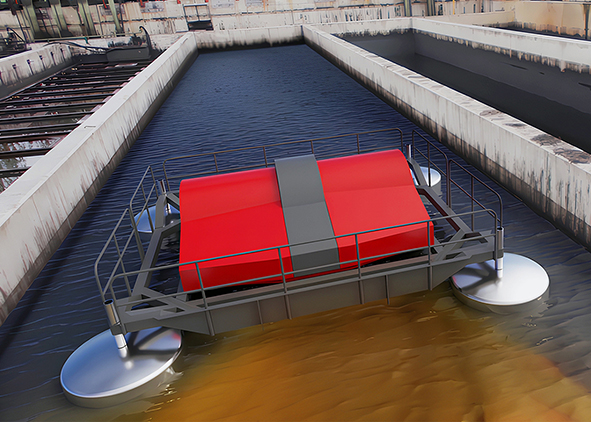
This paper presents the results of applied research, funded through a competitive call for proposals and carried out in 2022-23, for the redesign of a low environmental impact system for the recovery of oils and hydrocarbons. The Research Group worked on the analysis, evaluation, and redesign of the Discoil oil separator from a circular economy perspective, a machine which separates hydrocarbons from water in industrial plants or open waters without the use of chemicals or absorbent materials. The result provides a concrete example of applying sustainability and circularity strategies in the design of complex industrial products, directly targeting reductions in environmental impacts and offering methodological guidelines for replicating the process.
Article info
Received: 10/09/2025; Revised: 18/10/2025; Accepted: 20/10/2025
Downloads
Article Metrics Graph
References
Adetunji, A. I. and Olaniran, A. O. (2021), “Treatment of industrial oily wastewater by advanced technologies – A review”, in Applied Water Science, vol. 11, article 98, pp. 1-19. [Online] Available at: doi.org/10.1007/s13201-021-01430-4 [Accessed 5 October 2025].
Badalucco, L. and Fortuna, P. (2023), “Circular Design Strategies – The dissemination of circular design’s strategies – The Italian case study”, in Officina, vol. 40, pp. 64-73. [Online] Available at: doi.org/10.57623/2384-9029.2023.40.64-73 [Accessed 5 October 2025].
Bakker, C., den Hollander, M., van Hinte, E. and Zijlstra, Y. (2014), Products That Last – Product Design for Circular Business Models, TU Delft Library, Delft.
Bhamra, T. and Hernandez, R. J. (2021), “Thirty years of design for sustainability – An evolution of research, policy and practice”, in Design Science | An International Journal, vol. 7, article e2, pp. 1-17. [Online] Available at doi.org/10.1017/dsj.2021.2 [Accessed 5 October 2025].
Bompan, E. and Brambilla, I. N. (2021), Che cosa è l’economia circolare, Edizioni Ambiente, Milano.
Braungart, M. and McDonough, W. J. (2002), Cradle to Cradle – Remaking the Way We Make Things, North Point Press, New York.
Ceschin, F. and Gaziulusoy, I. (2016), “Evolution of design for sustainability – From product design to design for system innovations and transitions”, in Design Studies, vol. 47, pp. 118-163. [Online] Available at: doi.org/10.1016/j.destud.2016.09.002 [Accessed 5 October 2025].
Charter, M. (ed.) (2018), Designing for the Circular Economy, Routledge, London.
Chiapponi, M. (1989), Ambiente – Gestione e società – Un contributo alla teoria della progettazione ambientale, Feltrinelli, Milano.
Earley, R. (2017), “Circular Design Futures”, in The Design Journal | An International Journal for All Aspects of Design, vol. 20, issue 4, pp. 421-434. [Online] Available at: doi.org/10.1080/14606925.2017.1328164 [Accessed 5 October 2025].
EMF – Ellen MacArthur Foundation (2015), Growth within – A circular economy vision for a competitive Europe. [Online] Available at: ellenmacarthurfoundation.org/growth-within-a-circular-economy-vision-for-a-competitive-europe [Accessed 5 October 2025].
EMF – Ellen MacArthur Foundation (2013), Toward the circular economy – Vol. 1 – Economic and business rationale for an accelerated transition. [Online] Available at: content.ellenmacarthurfoundation.org/m/27265af68f11ef30/original/Towards-the-circular-economy-Vol-1.pdf [Accessed 5 September 2025].
European Commission (2024), Regulation (EU) 2024/1781 of the European Parliament and of the Council of 13 June 2024 establishing a framework for the setting of ecodesign requirements for sustainable products, amending Directive (EU) 2020/1828 and Regulation (EU) 2023/1542 and repealing Directive 2009/125/EC, document 32024R1781. [Online] Available at: eur-lex.europa.eu/legal-content/EN/TXT/?uri=CELEX%3A32024R1781&qid=1719580391746 [Accessed 5 October 2025].
European Commission (2020), Communication from the Commission to the European Parliament, the Council, the European Economic and Social Committee and the Committee of the Regions – A new Circular Economy Action Plan for a cleaner and more competitive Europe, document 52020DC0098, COM/2020/98 final. [Online] Available at: eur-lex.europa.eu/legal-content/EN/ALL/?uri=CELEX:52020DC0098 [Accessed 5 October 2025].
European Commission (2009), Directive 2009/125/EC of the European Parliament and of the Council of 21 October 2009 establishing a framework for the setting of ecodesign requirements for energy-related products (recast), document 32009L0125. [Online] Available at: eur-lex.europa.eu/legal-content/EN/TXT/?uri=CELEX:32009L0125 [Accessed 5 October 2025].
European Commission – Directorate-General for Communication (2020), Circular Economy Action Plan – For a cleaner and more competitive Europe, Publications Office of the European Union, Luxembourg. [Online] Available at: data.europa.eu/doi/10.2779/05068 [Accessed 5 October 2025].
Franconi, A., Badalucco, L., Peck, D. and Nasr, N. (2021), “A multi- hierarchical ‘Design for X’ framework for accelerating circular economy”, in Nissen, N. F. and Jaeger-Erben, M. (eds), PLATE | Product Lifetimes and The Environment – Procedings of the 3rd PLATE Conference, Berlin, Germany, September 18-20, 2019, Universitätsverlag der TU Berlin, Berlin, pp. 257-266. [Online] Available at: d-nb.info/1277723664/34 [Accessed 5 October 2025].
Maldonado, T. (1970), La speranza progettuale, Einaudi, Torino.
Mestre, A. and Cooper, T. (2017), “Circular Product Design – A Multiple Loops Life Cycle Design Approach for the Circular Economy”, in The Design Journal | An International Journal for All Aspects of Design, vol. 20, issue supp. 1, pp. 1620-1635. [Online] Available at doi.org/10.1080/14606925.2017.1352686 [Accessed 5 October 2025].
Mital, A., Desai, A., Subramanian, A. and Mital, A. (2015), “Designing for assembly and disassembly”, in Mital, A., Desai, A., Subramanian, A. and Mital, A. (eds), Product Development – A Structured Approach to Consumer Product Development, Design, and Manufacture, Elsevier, Amsterdam, pp. 159-202. [Online] Available at: doi.org/10.1016/B978-0-12-799945-6.00007-7 [Accessed 5 October 2025].
Pietroni, L., Di Stefano, A. and Galloppo, D. (2023), “Il design modulare verso l’economia circolare – Dal ‘fare per disfare’ al ‘fare per rifare’ | Modular design towards the circular economy – From ‘making to unmake’ to ‘making to remake’”, in Agathón | International Journal of Architecture, Art and Design, vol. 14, pp. 274-283. [Online] Available at doi.org/10.19229/2464-9309/14232023 [Accessed 5 October 2025].
Rau, T. and Oberhuber, S. (2019), Material Matters – L’importanza della materia – Un’alternativa al sovrasfruttamento, Edizioni Ambiente, Milano.
Stahel, W. R. (2010), The Performance Economy, Palgrave Macmillan, London. [Online] Available at: doi.org/10.1057/9780230274907 [Accessed 5 October 2025].
UN – United Nations (2015), Transforming Our World – The 2030 Agenda for Sustainable Development. [Online] Available at: sustainabledevelopment.un.org/post2015/transformingourworld/publication [Accessed 5 October 2025].
UN Water (2023), Water Quality and Wastewater. [Online] Available at: unwater.org/water-facts/water-quality-and-wastewater [Accessed 5 October 2025].
UN-Habitat – United Nations Human Settlements Programme and WHO – World Health Organization (2024), Progress on the proportion of domestic and industrial wastewater flows safely treated – Mid-term status of SDG Indicator 6.3.1 and acceleration needs, with a special focus on climate change, wastewater reuse and health. [Online] Available at: unwater.org/sites/default/files/2024-08/SDG6_Indicator_Report_631_Progress-on-Wastewater-Treatment_2024_EN_0.pdf [Accessed 5 October 2025].
UNDP – United Nations Development Programme (2016), Transitioning from the MDGs to the SDGs. [Online] Available at: undp.org/publications/transitioning-mdgs-sdgs [Accessed 5 October 2025].
UNEP – United Nations Environment Programme (2009), Design for Sustainability – A Step by Step Approach. [Online] Available at: unep.org/resources/report/design-sustainability-step-step-approach [Accessed 5 October 2025].
Varjani, S., Joshi, R., Srivastava, V. K., Ngo, H. H. and Guo, W. (2020), “Treatment of wastewater from petroleum industry – Current practices and perspectives”, in Environ Science and Pollution Research, vol. 27, pp. 27172-27180. [Online] Available at: doi.org/10.1007/s11356-019-04725-x [Accessed 5 October 2025].
Vezzoli, C. and Manzini, E. (2008), Design for Environmental Sustainability, Springer, London. [Online] Available at: doi.org/10.1007/978-1-84800-163-3 [Accessed 5 October 2025].
Zannoni, M., Succini, L., Rosato, L. and Pasini, V. (2024), “Transitional Industrial Designer – La responsabilità di progettisti e imprese per una transizione sostenibile | Transitional Industrial Designer – The responsibility of designers and companies for a sustainable transition”, in Agathón | International Journal of Architecture, Art and Design, vol. 15, pp. 332-343. [Online] Available at doi.org/10.19229/2464-9309/15282024 [Accessed 5 October 2025].
Downloads
Published
How to Cite
Issue
Section
Categories
License
Copyright (c) 2025 Laura Badalucco, Rosa Chiesa, Giorgio Gaino, Elisa Marchetto

This work is licensed under a Creative Commons Attribution 4.0 International License.
This Journal is published under Creative Commons Attribution Licence 4.0 (CC-BY).
License scheme | Legal code
This License allows anyone to:
Share: copy and redistribute the material in any medium or format.
Adapt: remix, transform, and build upon the material for any purpose, even commercially.
Under the following terms
Attribution: Users must give appropriate credit, provide a link to the license, and indicate if changes were made; users may do so in any reasonable manner, but not in any way that suggests the licensor endorses them or their use.
No additional restrictions: Users may not apply legal terms or technological measures that legally restrict others from doing anything the license permits.
Notices
Users do not have to comply with the license for elements of the material in the public domain or where your use is permitted by an applicable exception or limitation.
No warranties are given. The license may not give users all of the permissions necessary for their intended use. For example, other rights such as publicity, privacy, or moral rights may limit how you use the material.