Energy efficiency and smart buildings in public environmental policies
DOI:
https://doi.org/10.69143/2464-9309/18152025Keywords:
energy efficiency improvement, smartness, EPBD, energy performance certificate, public procurement codeAbstract
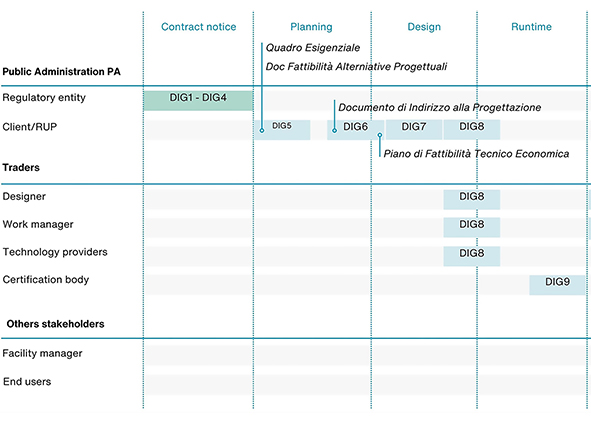
Responsible for approximately 50% of total energy consumption, the European building stock lies at the centre of strategies that identify the combination of energy efficiency and smartness as a key paradigm for the dual ecological and digital transition. Obsolete and poorly performing, it also represents one of the main barriers to achieving climate-neutrality goals by 2050. In this context, the contribution presents the first outcomes of the PRIN 2022 ‘Better Policy’ research project that, starting from an analysis of the gaps that hinder the implementation of environmental policies by Public Administrations, proposes experimental guidelines: an operational framework articulated around four strategic thematic pillars: decarbonisation, resource circularity, LCA metrics, and digitalisation for the ecological transition. Specifically, the article presents the section that integrates the Smart Readiness Indicator into the planning documents required by the new Italian Public Procurement Code, providing Public Administrations with standardised criteria, verification procedures, and monitoring protocols throughout the entire life-cycle of public buildings, thus transforming the public building stock into an advanced laboratory for the testing of environmental policies aligned with European decarbonisation objectives for 2050.
Article info
Received: 12/09/2025; Revised: 22/10/2025; Accepted: 23/10/2025
Downloads
Article Metrics Graph
References
Amann, C., Torres, P., Boldizsar, G., Hofer, G., Stumpf, W., Leutgob, K. and van Nuffel, L. (2023), Support to primary energy factors review (PEF) – Final report, Publications Office of the European Union, Luxembourg. [Online] Available at: data.europa.eu/doi/10.2833/404077 [Accessed 30 September 2025].
Autio, P., Borgentorp, E., Pulkka, L. and Junnila, S. (2024), “Smart Readiness Indicator: Ready for Business? Evidence from a Northern EU Country”, in Buildings, vol. 14, issue 11, article 3638, pp. 1-22. [Online] Available at: doi.org/10.3390/buildings14113638 [Accessed 30 September 2025].
Azzalin, M. (2024), “Indicatore smart readiness per l’edilizia – Asset digitali per la transizione energetica | Smart readiness for buildings – Digital asset for energy transition”, in Agathón | International Journal of Architecture, Art and Design, vol. 15, pp. 148-159. [Online] Available at: doi.org/10.19229/2464-9309/15112024 [Accessed 30 September 2025].
Beras, M., Brezocnik, M., Zuperl, U. and Kovacic, M. (2025), “Developing an Alternative Calculation Method for the Smart Readiness Indicator Based on Genetic Programming and Linear Regression”, in Buildings, vol. 15, issue 10, article 1675, pp. 1-24. [Online] Available at: doi.org/10.3390/buildings15101675 [Accessed 30 September 2025].
Capozzoli, A., Piscitelli, M. S., Maggiulli, M. and Pavan, A. (2024), Smart Building – La digitalizzazione per il Net Zero, Green Building Council Italia, Milano. [Online] Available at: gbcitalia.org/public_documents/GBCItalia_PositionPaper_BACS-BEMS_WEB.pdf [Accessed 30 September 2025].
Chatzikonstantinidis, K., Giama, E., Fokaides, P. A. and Papadopoulos, A. M. (2024), “Smart Readiness Indicator (SRI) as a Decision-Making Tool for Low Carbon Buildings”, in Energies, vol. 17, issue 6, article 1406, pp. 1-18. [Online] Available at: doi.org/10.3390/en17061406 [Accessed 30 September 2025].
Del Curto, D., Garzulino, A. and Turrina, A. (2024), “Sostenibilità e transizione energetica – Prospettive per un approccio integrato al patrimonio costruito | Sustainability and energy transition – Perspectives for an integrated approach to the built heritage”, in Agathón | International Journal of Architecture, Art and Design, vol. 15, pp. 114-123. [Online] Available at: doi.org/10.19229/2464-9309/1582024 [Accessed 30 September 2025].
Delavar, T., Borgentorp, E. and Junnila, S. (2025), “The Smart Buildings Revolution – A Comprehensive Review of the Smart Readiness Indicator Literature”, in Applied Sciences, vol. 15, issue 4, article 1808, pp. 1-28. [Online] Available at: doi.org/10.3390/app15041808 [Accessed 30 September 2025].
European Commission (2024), Communication from the Commission to the European Parliament, the Council, the European Economic and Social Committee and the Committee of the Regions – State of the Digital Decade 2024, document 52024DC0260, COM/2024/260 final. [Online] Available at: eur-lex.europa.eu/legal-content/EN/TXT/?uri=CELEX%3A52024DC0260# [Accessed 30 September 2025].
European Commission (2021a), Communication from the Commission to the European Parliament, the Council, the European Economic and Social Committee and the Committee of the Regions – 2030 Digital Compass – the European way for the Digital Decade, document 52021DC0118, COM/2021/118 final. [Online] Available at eur-lex.europa.eu/legal-content/EN/TXT/?uri=celex:52021DC0118 [Accessed 30 September 2025].
European Commission (2021b), Communication from the Commission to the European Parliament, the Council, the European Economic and Social Committee and the Committee of the Regions – Fit for 55 – Delivering the EU’s 2030 climate target on the way to climate neutrality, document 52021DC0550, COM/2021/550 final. [Online] Available at: eur-lex.europa.eu/legal-content/EN/TXT/?uri=celex:52021DC0550 [Accessed 30 September 2025].
European Commission (2020a), Communication from the Commission to the European Parliament, the Council, the European Economic and Social Committee and the Committee of the Regions – A Renovation Wave for Europe – Greening our buildings, creating jobs, improving lives, document 52020DC0662, COM/2020/662 final. [Online] Available at: eur-lex.europa.eu/legal-content/EN/TXT/?qid=1603122220757&uri=CELEX:52020DC0662 [Accessed 30 September 2025].
European Commission (2020b), Reflection Paper Towards a Sustainable Europe by 2030, document 52019DC0022, COM/2019/22 final. [Online] Available at: eur-lex.europa.eu/legal-content/EN/ALL/?uri=CELEX%3A52019DC0022 [Accessed 30 September 2025].
European Commission (2020c), Commission Delegated Regulation (EU) 2020/2155 of 14 October 2020 supplementing Directive (EU) 2010/31/EU of the European Parliament and of the Council by establishing an optional common European Union scheme for rating the smart readiness of buildings, document 32020R2155, C/2020/6930. [Online] Available at: eur-lex.europa.eu/eli/reg_del/2020/2155/oj [Accessed 30 September 2025].
European Commission (2019a), Communication from the Commission to the European Parliament, the European Council, the Council, the European Economic and Social Committee and the Committee of the Regions – The European Green Deal, document 52019DC0640, COM/2019/640 final. [Online] Available at: eur-lex.europa.eu/legal-content/EN/TXT/?uri=celex:52019DC0640 [Accessed 30 September 2025].
European Commission (2019b), Urban Agenda for the EU – Multi-level governance in action. [Online] Available at: ec.europa.eu/regional_policy/en/information/publications/brochures/2019/ urban-agenda-for-the-eu-multi-level-governance-in-action [Accessed 30 September 2025].
European Parliament and Council of the European Union (2024), Directive (EU) 2024/1275 of the European Parliament and of the Council of 24 April 2024 on the energy performance of buildings (recast), document 32024L1275. [Online] Available at: data.europa.eu/eli/dir/2024/1275/oj [Accessed 30 September 2025].
European Parliament and Council of the European Union (2023a), Directive (EU) 2023/1791 of the European Parliament and of the Council of 13 September 2023 on energy efficiency and amending Regulation (EU) 2023/955 (recast), document 32023L1791. [Online] Available at: data.europa.eu/eli/dir/2023/1791/oj [Accessed 30 September 2025].
European Parliament and Council of the European Union (2023b), Directive (EU) 2023/2413 of the European Parliament and of the Council of 18 October 2023 amending Directive (EU) 2018/2001, Regulation (EU) 2018/1999 and Directive 98/70/EC as regards the promotion of energy from renewable sources, and repealing Council Directive (EU) 2015/652, document 32023L2413. [Online] Available at: data.europa.eu/eli/dir/2023/2413/oj [Accessed 30 September 2025].
European Parliament and Council of the European Union (2020), Regulation (EU) 2020/852 of the European Parliament and of the Council of 18 June 2020 on the establishment of a framework to facilitate sustainable investment, and amending Regulation (EU) 2019/2088, document 32020R0852. [Online] Available at: data.europa.eu/eli/reg/2020/852/oj [Accessed 30 September 2025].
European Parliament and Council of the European Union (2018), Regulation (EU) 2018/1999 of the European Parliament and of the Council of 11 December 2018 on the Governance of the Energy Union and Climate Action, amending Regulations (EC) No 663/2009 and (EC) No 715/2009 of the European Parliament and of the Council, Directives 94/22/EC, 98/70/EC, 2009/31/EC, 2009/73/EC, 2010/31/EU, 2012/27/EU and 2013/30/EU of the European Parliament and of the Council, Council Directives 2009/119/EC and (EU) 2015/652 and repealing Regulation (EU) No 525/2013 of the European Parliament and of the Council, document 32018R1999. [Online] Available at: eur-lex.europa.eu/legal-content/EN/ALL/?uri=CELEX%3A32018R1999 [Accessed 30 September 2025].
Fokaides, P. A., Panteli, C. and Panayidou, A. (2020), “How Are the Smart Readiness Indicators Expected to Affect the Energy Performance of Buildings – First Evidence and Perspectives”, in Sustainability, vol. 12, issue 22, article 9496, pp. 1-16. [Online] Available at: doi.org/10.3390/su12229496 [Accessed 30 September 2025].
Ghodsian, N. (2025), “Top 7 IoT Building Automation Trends Transforming Smart Buildings”, in neuroject, 08/04/2025. [Online] Available at: neuroject.com/iot-building-automation/ [Accessed 30 September 2025].
Heisel, F. and Rau-Oberhuber, S. (2020), “Calculation and evaluation of circularity indicators for the built environment using the case studies of UMAR and Madaster”, in Journal of Cleaner Production, vol. 243, article 118482, pp. 1-12. [Online] Available at: doi.org/10.1016/j.jclepro.2019.118482 [Accessed 30 September 2025].
IEA – International Energy Agency (2021), Net Zero by 2050 – A Roadmap for the Global Energy Sector. [Online] Available at: iea.blob.core.windows.net/assets/deebef5d-0c34-4539-9d0c-10b13d840027/NetZeroby2050-ARoadmapfortheGlobalEnergySector_CORR.pdf [Accessed 30 September 2025].
Lauria, M., Azzalin, M., Giglio, F. and La Face, G. M. (2025), “Responsive Public Policies for Smart and Sustainable Buildings – An Experimental Application of the Smart Readiness Indicator”, in Buildings, vol. 15, issue 12, article 2002, pp. 1-22. [Online] Available at: doi.org/10.3390/buildings15122002 [Accessed 30 September 2025].
Marzinger, T. and Osterreicher, D. (2019), “Supporting the Smart Readiness Indicator – A Methodology to Integrate a Quantitative Assessment of the Load Shifting Potential of Smart Buildings”, in Energies, vol. 12, issue 10, article 1955, pp. 1-20. [Online] Available at: doi.org/10.3390/en12101955 [Accessed 30 September 2025].
Ness, D. (2024), “La decarbonizzazione degli edifici sarà sufficiente? Limitare e ridistribuire l’aumento di superficie costruita | Will decarbonising buildings be enough? Constrain and redistribute growth in floor area”, in Agathón | International Journal of Architecture, Art and Design, vol. 15, pp. 84-97. [Online] Available at: doi.org/10.19229/2464-9309/1562024 [Accessed 30 September 2025].
Presidente della Repubblica (2023), “Decreto Legislativo 31 marzo 2023, n. 36 – Codice dei contratti pubblici in attuazione dell’articolo 1 della legge 21 giugno 2022, n. 78, recante delega al Governo in materia di contratti pubblici (23G00044), entrata in vigore del provvedimento 01/04/2023 (Ultimo aggiornamento all’atto pubblicato il 09/09/2025)”, in Gazzetta Ufficiale, n. 77 del 31/03/2023 – Suppl. Ordinario n. 12. [Online] Available at: normattiva.it/uri-res/N2Ls?urn:nir:stato:decreto.legislativo:2023;036 [Accessed 30 September 2025].
Rangasamy, V. and Yang, J.-B. (2024), “The convergence of BIM, AI and IoT – Reshaping the future of prefabricated construction”, in Journal of Building Engineering, vol. 84, article 108606, pp. 1-15. [Online] Available at: doi.org/10.1016/j.jobe.2024.108606 [Accessed 30 September 2025].
Tang, S., Shelden, D. R., Eastman, C. M., Pishdad-Bozorgi, P. and Gao, X. (2019), “A review of building information modeling (BIM) and the internet of things (IoT) devices integration – Present status and future trends”, in Automation in Construction, vol. 101, pp. 127-139. [Online] Available at: doi.org/10.1016/j.autcon.2019.01.020 [Accessed 30 September 2025].
UNEP – United Nations Environment Program (2022), Adaptation Gap Report 2022 – Too little, too slow – Climate adaptation failure puts world at risk. [Online] Available at: unep.org/resources/adaptation-gap-report-2022 [Accessed 30 September 2025].
UN – United Nations (2015), Transforming Our World – The 2030 Agenda for Sustainable Development, A/RES/70/1. [Online] Available at: sdgs.un.org/2030agenda [Accessed 30 September 2025].
UN-Habitat (2020), World Cities Report 2020 – The Value of Sustainable Urbanization, United Nations Human Settlements Programme, Nairobi. [Online] Available at: unhabitat.org/world-cities-report-2020-the-value-of-sustainable-urbanization [Accessed 30 September 2025].
UNI EN ISO 52120-1:2022, Energy performance of buildings – Contribution of building automation, controls and building management – Part 1 – General framework and procedures. [Online] Available at store.uni.com/en/uni-en-iso-52120-1-2022 [Accessed 30 September 2025].
Walczyk, G. and Ozadowicz, A. (2025), “Moving Forward in Effective Deployment of the Smart Readiness Indicator and the ISO 52120 Standard to Improve Energy Performance with Building Automation and Control Systems”, in Energies, vol. 18, issue 5, article 1241, pp. 1-28. [Online] Available at: doi.org/10.3390/en18051241 [Accessed 30 September 2025].
WEF – World Economic Forum (2022), “Digital solutions can reduce global emissions by up to 20%. – Here’s how”, in weforum, 23/05/2022. [Online] Available at: weforum.org/agenda/2022/05/how-digital-solutions-can-reduce-global-emissions [Accessed 30 September 2025].
Downloads
Published
How to Cite
Issue
Section
Categories
License
Copyright (c) 2025 Massimo Lauria, Maria Azzalin, Francesca Giglio, Giovanna Maria La Face

This work is licensed under a Creative Commons Attribution 4.0 International License.
This Journal is published under Creative Commons Attribution Licence 4.0 (CC-BY).
License scheme | Legal code
This License allows anyone to:
Share: copy and redistribute the material in any medium or format.
Adapt: remix, transform, and build upon the material for any purpose, even commercially.
Under the following terms
Attribution: Users must give appropriate credit, provide a link to the license, and indicate if changes were made; users may do so in any reasonable manner, but not in any way that suggests the licensor endorses them or their use.
No additional restrictions: Users may not apply legal terms or technological measures that legally restrict others from doing anything the license permits.
Notices
Users do not have to comply with the license for elements of the material in the public domain or where your use is permitted by an applicable exception or limitation.
No warranties are given. The license may not give users all of the permissions necessary for their intended use. For example, other rights such as publicity, privacy, or moral rights may limit how you use the material.