Environmental and social life cycle for low-carbon design
DOI:
https://doi.org/10.69143/2464-9309/18172025Keywords:
carbon along the entire life cycle, E-LCA, S-LCA, health and safety at work, environmental and social impactsAbstract
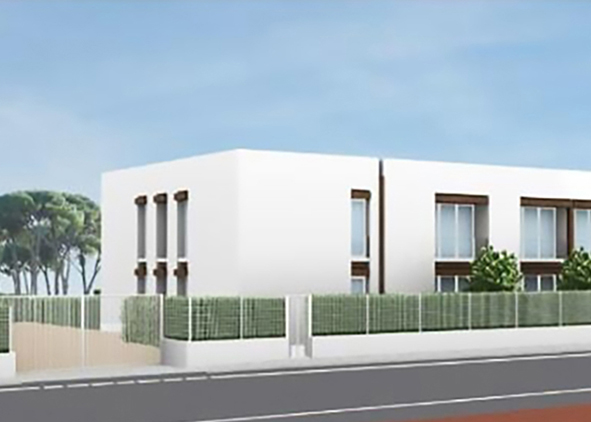
Achieving the objective of low-emission buildings by 2030 requires an integrated revision of design criteria, including an assessment of carbon emissions throughout the entire building life cycle. Seismic and territorial constraints strongly influence these assessments and can increase global warming potential by up to 20%. However, an approach focused solely on the environmental dimension of sustainability may provide only a partial interpretation. It may neglect the social impacts related to the health and safety of workers, who are fundamental actors across the entire construction supply chain. From this perspective, this study proposes an integrated methodological approach combining environmental and social life cycle assessments. It is applied to the structural component of a public residential building located in an area of medium seismicity, representative of 60% of the territory of Tuscany (Italy). The analysis relates environmental and social impacts, demonstrating how the accident risk assessment can support the definition of useful metrics for labelling systems, both at the product and building levels.
Article info
Received: 17/09/2025; Revised: 07/11/2025; Accepted: 10/11/2025
Downloads
Article Metrics Graph
References
Arvidsson, R., Hildenbrand, J., Baumann, H., Islam, K. M. N. and Parsmo, R. (2018), “A method for human health impact assessment in social LCA – Lessons from three case studies”, in The International Journal of Life Cycle Assessment, vol. 23, pp. 690-699. [Online] Available at: doi.org/10.1007/s11367-016-1116-7 [Accessed 30 September 2025].
Ayassamy, P. and Pellerin, R. (2023), “Social life-cycle assessment in the construction industry – A review of characteristics, limitations, and challenges of S-LCA through case studies”, in Sustainability, vol. 15, issue 19, article 14569, pp. 1-19. [Online] Available at: doi.org/10.3390/su151914569 [Accessed 30 September 2025].
Backes, J. G. and Traverso, M. (2023), “Social life cycle assessment in the construction industry – Systematic literature review and identification of relevant social indicators for carbon reinforced concrete”, in Environment, Development and Sustainability, vol. 26, pp. 7199-7233. [Online] Available at: doi.org/10.1007/s10668-023-03005-6 [Accessed 30 September 2025].
Coppola, L., Palumbo, E., Coffetti, D., Panozzo, C., Rapelli, S., Cellurale, M. and Rinaldi, C. (2023), Edilizia costruzioni – Studio LCA della filiera del calcestruzzo e degli aggregati riciclati, ENEA, Milano. [Online] Available at: pubblicazioni.enea.it/download.html?task=download.send&id=744:edilizia-costruzioni-studio-lca-della-filiera-del-calcestruzzo-e-degli-aggregati-riciclati&catid=3 [Accessed 30 September 2025].
Dodd, N., Cordella, M., Traverso, M. and Donatello, S. (2017), Level(s) – A common EU framework of core sustainability indicators for office and residential buildings – Parts 1 and 2 – Introduction to Level(s) and how it works (Beta v1.0), document EUR 28899 EN, Publications Office of the European Union, Luxembourg. [Online] Available at: doi.org/10.2760/827838 [Accessed 30 September 2025].
European Commission (2025), Communication from the Commission to the European Parliament, the Council, the European Economic and Social Committee and the Committee of the Regions – The Clean Industrial Deal – A joint roadmap for competitiveness and decarbonisation, document 52025DC0085, COM/2025/85 final. [Online] Available at: eur-lex.europa.eu/legal-content/EN/TXT/?uri=CELEX%3A52025DC0085 [Accessed 30 September 2025].
European Commission (2020), Communication from the Commission to the European Parliament, the Council, the European Economic and Social Committee and the Committee of the Regions – Sustainable Europe Investment Plan European Green Deal Investment Plan, document 52020DC0021, COM/2020/21 final. [Online] Available at: eur-lex.europa.eu/legal-content/EN/ALL/?uri=CELEX%3A52020DC0021 [Accessed 30 September 2025].
European Parliament and Council of the European Union (2024), Directive (EU) 2024/1275 of the European Parliament and of the Council of 24 April 2024 on the energy performance of buildings (recast), document 32024L1275. [Online] Available at: data.europa.eu/eli/dir/2024/1275/oj [Accessed 30 September 2025].
Ghisellini, P., Passaro, R. and Ulgiati, S. (2023), “Environmental and Social Life Cycle Assessment of Waste Electrical and Electronic Equipment (WEEE) Management in Italy According to EU Directives”, in Environments, vol. 10, issue 7, article 106, pp. 1-29. [Online] Available at: doi.org/10.3390/environments10070106 [Accessed 30 September 2025].
Hamed, A., Maister, K., Murali, S. H., Radwan, L., Paternostro, A. and Ciroth, A. (2025), PSILCA – A Product Social Impact – Life Cycle Assessment Database, version 4.0. [Online] Available at: openlca.org/wp-content/uploads/2025/07/PSILCA_manual_for-v.4_04072025.pdf [Accessed 30 September 2025].
INAIL (2025), Tabelle nazionali con cadenza mensile – Analisi della numerosità degli infortuni – Dati rilevati al 31 luglio 2025. [Online] Available at: dati.inail.it/opendata_files/downloads/daticoncadenzamensileinfortuni/ Tabelle_nazionali_cadenza_mensile_Lug_2025.pdf [Accessed 30 September 2025].
INAIL (2023), Relazione annuale 2022. [Online] Available at: lavorosi.it/fileadmin/user_upload/PRASSI_2023/inail-relazione-annuale-2022.pdf [Accessed 30 September 2025].
ISPRA (2025), Emissioni di gas serra – Nel 2023 in calo del 26% rispetto al 1990 – Le rinnovabili trainano il miglioramento – Resta critico il settore dei trasporti, comunicato stampa, 25/03/2025. [Online] Available at: emissioni.sina.isprambiente.it/wp-content/uploads/2025/03/Comunicato-stampa-emissioni-gas-serra_2025.def_.pdf [Accessed 30 September 2025].
ISPRA (2025). Rapporto Rifiuti Speciali – Edizione 2025. [Online] Available at: isprambiente.gov.it/it/pubblicazioni/rapporti/rapporto-rifiuti-speciali-edizione-2025 [Accessed 30 September 2025].
ISTAT (2024), “Conti economici nazionali – Anno 2023”, in istat.it, 23/09/2024. [Online] Available at: istat.it/comunicato-stampa/conti-economici-nazionali-anno-2023 [Accessed 30 September 2025].
ISTAT (2023), Occupati e addetti per settore di attività economica (ATECO) – Anno 2023. [Online] Available at: esploradati.istat.it/databrowser/#/it/dw/categories/IT1,Z0900ENT,1.0/ ENT_STRU/DICA_ASIAULP/IT1,183_285_DF_DICA_ASIAULP_3,1.0 [Accessed 30 September 2025].
Kühnen, M. and Hahn, R. (2017), “Indicators in social life cycle assessment – A review of frameworks, theories, and empirical experience”, in Journal of Industrial Ecology, vol. 21, issue 6, pp. 1547-1565. [Online] Available at: doi.org/10.1111/jiec.12663 [Accessed 30 September 2025].
Larsen, V. G., Tollin, N., Sattrup, P. A., Birkved, M. and Holmboe, T. (2022), “What are the challenges in assessing Circular Economy for the built environment? – A literature review on integrating LCA, LCC and S-LCA in Life Cycle Sustainability Assessment (LCSA)”, in Journal of Building Engineering, vol. 50, article 104203, pp. 1-16. [Online] Available at: doi.org/10.1016/j.jobe.2022.104203 [Accessed 30 September 2025].
Legambiente (2022), “Decarbonizzare le costruzioni, la nuova sfida del settore edilizio”, in Legambiente, 08/11/2022. [Online] Available at: legambiente.it/comunicati-stampa/decarbonizzare-le-costruzioni-la-nuova-sfida-del-settore-edilizio/ [Accessed 30 September 2025].
Mancini, L., Eynard, U., Eisfeldt, F., Ciroth, A., Blengini, G. A. and Pennington, D. (2018), “Social assessment of raw materials supply chains – A life cycle-based approach”, in The International Journal of Life Cycle Assessment, vol. 23, issue 7, pp. 1474-1490. [Online] Available at: op.europa.eu/en/publication-detail/-/publication/f29c7adb-1f8a-11e9-8d04-01aa75ed71a1/language-en [Accessed 30 September 2025].
Monosilio, F., Altieri, G., Ricciardelli, E., Fimiani, C. and Forte, A. (eds) (2022), Il ruolo del settore delle costruzioni nel sistema economico – Struttura, interdipendenze settoriali e crescita. [Online] Available at: ance.it/wp-content/uploads/allegati/Ricerca_Ance-Istat_Importanza_del_settore_delle_costruzioni_Giugno_2024.pdf [Accessed 30 September 2025].
Morrone, M. and Lanci, C. (eds) (2020), Import-Export materie prime – La dipendenza dell’Italia dai Paesi esteri (2020). [Online] Available at: unmig.mase.gov.it/wp-content/uploads/2020/11/Ecomondo2020-ISTAT.pdf [Accessed 30 September 2025]
Ness, D. (2024), “La decarbonizzazione degli edifici sarà sufficiente? Limitare e ridistribuire l’aumento di superficie costruita | Will decarbonising buildings be enough? Constrain and redistribute growth in floor area”, in Agathón | International Journal of Architecture, Art and Design, vol. 15, pp. 84-97. [Online] Available at: doi.org/10.19229/2464-9309/1562024 [Accessed 30 September 2025].
Norris, C. B., Aulisio, D. and Norris, G. A. (2012), “Working with the Social Hotspots Database – Methodology and findings from 7 social scoping assessments”, in Dornfeld, D. A. and Linke, B S. (eds), Leveraging Technology for a Sustainable World – Proceedings of the 19th CIRP Conference on Life Cycle Engineering, University of California at Berkeley, Berkeley, USA, May 23-25, 2012, Springer Berlin Heidelberg, pp. 581-586. [Online] Available at: doi.org/10.1007/978-3-642-29069-5_98 [Accessed 30 September 2025].
Pradeep, M. S., Rismanchi, B. and Ngo, T. (2025), “Dynamic and Circular Life Cycle Sustainability Assessments (DC-LCSAs) for prefabricated buildings – A systematic review and conceptual model”, in Building and Environment, vol. 284, article 113396, pp. 1-20. [Online] Available at: doi.org/10.1016/j.buildenv.2025.113396 [Accessed 30 September 2025].
Schmidt, A., Jelnes, J. E., Hansen, L. E. and Jensen, A. A. (1992), “Health impacts and life-cycle assessment”, in Nordic Council of Ministers (ed.), Product life cycle assessment – Principles and methodology, Nordic Council of Ministers, Copenhagen, pp. 232-262. [Online] Available at: books.google.it/books?id=6Doxe-YmGYUC&printsec=frontcover&hl=it&source=gbs_ge_summary_r&cad= 0#v=onepage&q&f=false [Accessed 30 September 2025].
Sposito, C. and De Giovanni, G. (2023), “Affrontare la complessità – Integrare LCA, ERA ed ESA per valutare impatti e benefici antropici sulla biosfera | Dealing with complexity – Integrating LCA, ERA and ESA to assess human impacts and benefits on the biosphere”, in Agathón | International Journal of Architecture, Art and Design, vol. 14, pp. 12-39. [Online] Available at: doi.org/10.19229/2464-9309/1412023 [Accessed 30 September 2025].
Traverso, M. and Mankaa, R. N. (2025), “The social life cycle assessment of products and organisations – Methodological developments and implementations”, in The International Journal of Life Cycle Assessment, vol. 30, pp. 1011-1017. [Online] Available at: doi.org/10.1007/s11367-025-02480-5 [Accessed 30 September 2025].
UNEP – United Nations Environment Programme (2020), Guidelines for social life cycle assessment of products and organisations 2020. [Online] Available at: lifecycleinitiative.org/wp-content/uploads/2021/01/Guidelines-for-Social-Life-Cycle-Assessment-of-Products-and-Organizations-2020-22.1.21sml.pdf [Accessed 30 September 2025].
UNEP – United Nations Environment Programme (2009), Guidelines for Social Life Cycle Assessment of Products. [Online] Available at: wedocs.unep.org/bitstream/handle/20.500.11822/7912/-Guidelines%20for%20Social%20Life%20Cycle%20Assessment%20of%20 Products-20094102.pdf?sequence=3&%3BisAllowed= [Accessed 30 September 2025].
Wang, S., Su, D. and Wu, Y. (2022), “Environmental and Social Life Cycle Assessments of an Industrial LED Lighting Product”, in Environmental Impact Assessment Review, vol. 95, article 106804, pp. 1-13. [Online] Available at: doi.org/10.1016/j.eiar.2022.106804 [Accessed 30 September 2025].
Downloads
Published
How to Cite
Issue
Section
Categories
License
Copyright (c) 2025 Elisabetta Palumbo, Irene Mazzei, Martina Perpetua, Francesco Pomponi

This work is licensed under a Creative Commons Attribution 4.0 International License.
This Journal is published under Creative Commons Attribution Licence 4.0 (CC-BY).
License scheme | Legal code
This License allows anyone to:
Share: copy and redistribute the material in any medium or format.
Adapt: remix, transform, and build upon the material for any purpose, even commercially.
Under the following terms
Attribution: Users must give appropriate credit, provide a link to the license, and indicate if changes were made; users may do so in any reasonable manner, but not in any way that suggests the licensor endorses them or their use.
No additional restrictions: Users may not apply legal terms or technological measures that legally restrict others from doing anything the license permits.
Notices
Users do not have to comply with the license for elements of the material in the public domain or where your use is permitted by an applicable exception or limitation.
No warranties are given. The license may not give users all of the permissions necessary for their intended use. For example, other rights such as publicity, privacy, or moral rights may limit how you use the material.