Investing in housing for the elderly – Towards an ESG taxonomy for building regeneration
DOI:
https://doi.org/10.69143/2464-9309/1862025Keywords:
inclusive living, senior housing, social taxonomy, certification protocols, sustainabilityAbstract
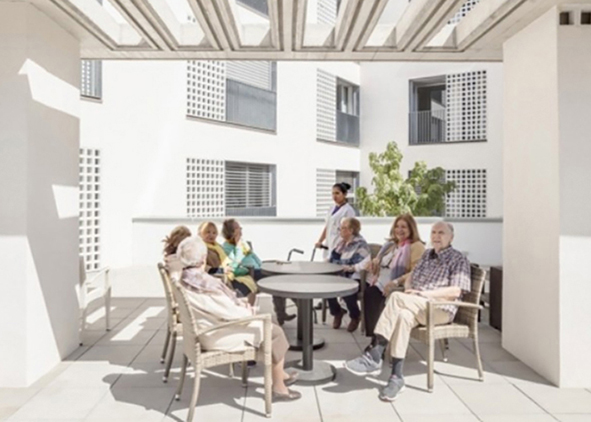
The growing focus on senior housing is shifting the real estate market paradigm, attracting the attention of financial operators and investors to the sector’s ESG (environmental, social, and governance) sustainability. Measures introduced by the European Union on carbon neutrality and sustainable finance require implementing regenerative processes and management models within integrated decarbonisation scenarios and verifying the 2030 Agenda objectives, such as reducing the environmental footprint and generating economic and social benefits. The research defines a tool to support the design of senior housing practices from an ESG perspective, proposing a positive social impact taxonomy designed to bridge the current knowledge gap and support this transition.
Article info
Received: 15/09/2025; Revised: 16/10/2025; Accepted: 17/10/2025
Downloads
Article Metrics Graph
References
Alini, L. and Martino, A. (2023), “Progettare la sostenibilità – Metodi e strategie di valutazione ambientale | Designing sustainability – Environmental assessment methods and strategies”, in Techne | Journal of Technology for Architecture and Environment, vol. 26, pp. 267-275. [Online] Available at: doi.org/10.36253/techne-15289 [Accessed 10 September 2025].
Angelucci, F., Cellucci, C., Di Sivo, M. and Ladiana, D. (2015), “Autonomia, Indipendenza, Inclusione | Autonomy, Independence, Inclusion”, in Techne | Journal of Technology for Architecture and Environment, vol. 9, pp. 85-95. [Online] Available at: doi.org/10.13128/Techne-16109 [Accessed 10 September 2025].
Arbizzani, E., Clemente, C. and Mangiatordi, A. (2022), “Senior smart housing – Abitazioni per anziani come infrastruttura sociale di comunità | Senior smart housing – Housing for the elderly as a community social infrastructure”, in Techne | Journal of Technology for Architecture and Environment, vol. 23, pp. 221-231. [Online] Available at: doi.org/10.36253/techne-12156 [Accessed 10 September 2025].
Arquilla, V. and Paracolli, A. (2023), “Design sull’esperienza dell’utente e sostenibilità degli oggetti con intelligenza artificiale | User experience design and sustainability of AI-infused objects”, in Agathón | International Journal of Architecture, Art and Design, vol. 13, pp. 259-268. [Online] Available at: doi.org/10.19229/2464-9309/13222023 [Accessed 10 September 2025].
Attaianese, E. and Di Dario, Y. (2024), “Beyond accessibility – Universal design for healthy and inclusive public space | Oltre l’accessibilita – Progettazione universale per uno spazio pubblico sano e inclusivo”, in SMC | Sustainable Mediterranean Construction, vol. 20, pp. 34-40. [Online] Available at: sustainablemediterraneanconstruction.eu/it/rivista/2024-20/2024-20-034/ [Accessed 10 September 2025].
Cangelli, E. (2025), “Rigenerazione urbana e SDG – Approcci progettuali per la riduzione delle disuguaglianze urbane | Urban regeneration and SDGs – Design approaches for reducing urban inequalities”, in Agathón | International Journal of Architecture, Art and Design, vol. 17, pp. 28-41. [Online] Available at: doi.org/10.69143/2464-9309/1712025 [Accessed 10 September 2025].
Chaza Chimeno, M. R., Revellini, R. and Cellucci, C. (2024), “Invecchiamento della popolazione e spazi urbani – Nuove sfide digitali per il benessere degli anziani | Ageing population and urban spaces – New digital challenges for elderly well-being”, in Agathón | International Journal of Architecture, Art and Design, vol. 16, pp. 98-107. [Online] Available at: doi.org/10.19229/2464-9309/1682024 [Accessed 10 September 2025].
Ciaramella, A., Invernale, A. and Gornati, A. (2023), Qualità e prestazioni degli edifici – Sistemi di rating e indicatori ESG per la misurazione della qualità immobiliare, FrancoAngeli, Milano.
Colliers (2022), Capital Markets EMEA – European Living Snapshot. [Online] Available at: arelitalia.com/images/img-blog/ColliersEMEA_EuropeanLivingSnapshot_April2022%20FINAL.pdf [Accessed 11 October 2025].
Confindustria Assoimmobiliare (2024), La “S” di ESG – Misurare il Valore Sociale generato dagli investimenti Real Estate. [Online] Available at: assoimmobiliare.it/wp-content/uploads/2024/06/LA-_S_-DI-ESG-1.pdf [Accessed 10 September 2025].
Confindustria Assoimmobiliare (2022), Gli investitori immobiliari e la sfida ESG – Indagine 2021. [Online] Available at: assoimmobiliare.it/wp-content/uploads/2022/05/2200520_assoimmobiliare_survey.pdf [Accessed 10 September 2025].
Dodd, N., Donatello, S. and Cordella, M. (2021), Level(s) – A common EU framework of core sustainability indicators for office and residential buildings – User manual 2 – Setting up a project to use the Level(s) common framework. [Online] Available at: susproc.jrc.ec.europa.eu/product-bureau/sites/default/files/2021-01/UM2_Setting_up_a_project_to_use_Level%28s%29_v1.1_26pp.pdf [Accessed 10 September 2025].
European Commission (2024), Communication from the Commission to the European Parliament, the Council, the European Economic and Social Committee and the Committee of the Regions – Securing our future Europe’s 2040 climate target and path to climate neutrality by 2050 building a sustainable, just and prosperous society, document 52024DC0063, COM/2024/63 final. [Online] Available at: eur-lex.europa.eu/legal-content/EN/TXT/?uri=COM%3A2024%3A63%3AFIN [Accessed 18 October 2024].
European Commission (2019), Communication from the Commission to the European Parliament, the European Council, the Council, the European Economic and Social Committee and the Committee of the Regions – The European Green Deal, document 52019DC0640, 640 final. [Online] Available at: eur-lex.europa.eu/legal-content/EN/TXT/?uri=COM%3A2019%3A640%3AFIN [Accessed 10 September 2025].
European Commission (2018), Communication from the Commission to the European Parliament, the Council, the European Economic and Social Committee and the Committee of the Regions – Action Plan – Financing Sustainable Growth, document 52018DC0097, COM/2018/97 final. [Online] Available at: eur-lex.europa.eu/legal-content/EN/TXT/?uri=celex:52018DC0097 [Accessed 10 September 2025].
European Commission (2011), Communication from the Commission to the European Parliament, the Council, the European Economic and Social Committee and the Committee of the Regions. A renewed EU strategy 2011-14 for Corporate Social Responsibility, COM/2011/681 final. [Online] Available at: eur-lex.europa.eu/legal-content/EN/TXT/PDF/?uri=CELEX:52011DC0681 [Accessed 10 September 2025].
European Parliament and Council of the European Union (2019), Regulation (EU) 2019/2088 of the European Parliament and of the Council of 27 November 2019 on sustainability‐related disclosures in the financial services sector, document 32019R2088, PE/87/2019/REV/1. [Online] Available at: eur-lex.europa.eu/eli/reg/2019/2088/oj?eliuri=eli%3Areg%3A2019%3A2088%3Aoj&locale=en [Accessed 10 September 2025].
European Union (2024a), Regulation (EU) 2024/3005 of the European Parliament and of the Council of 27 November 2024 on the transparency and integrity of Environmental, Social and Governance (ESG) rating activities, and amending regulations (EU) 2019/2088 and (EU) 2023/2859, document 32024R3005, PE/43/2024/REV/1. [Online] Available at: data.europa.eu/eli/reg/2024/3005/oj [Accessed 10 September 2025].
European Union (2024b), Directive (EU) 2024/1760 of the European Parliament and of the Council of 13 June 2024 on corporate sustainability due diligence and amending Directive (EU) 2019/1937 and Regulation (EU) 2023/2859 (Text with EEA relevance), document 32024L1760, PE/9/2024/REV/1. [Online] Available at: eur-lex.europa.eu/legal-content/IT/TXT/PDF/?uri=OJ:L_202401760 [Accessed 10 September 2025].
European Union (2022a), Directive (EU) 2022/2464 of the European Parliament and of the Council of 14 December 2022 amending Regulation (EU) No 537/2014, Directive 2004/109/EC, Directive 2006/43/EC and Directive 2013/34/EU, as regards corporate sustainability reporting, document 32022L2464, PE/35/2022/REV/1. [Online] Available at: eur-lex.europa.eu/eli/dir/2022/2464/oj/eng [Accessed 10 September 2025].
European Union (2022b), Opinion of the European Economic and Social Committee on Social taxonomy – Challenges and opportunities, document 52022IE0721, EESC 2022/00721. [Online] Available at: eur-lex.europa.eu/legal-content/EN/TXT/?uri=oj:JOC_2022_486_R_0003 [Accessed 10 September 2025].
European Union (2022c), Commission Delegated Regulation (EU) 2022/1288 of 6 April 2022 supplementing Regulation (EU) 2019/2088 of the European Parliament and of the Council with regard to regulatory technical standards specifying the details of the content and presentation of the information in relation to the principle of ‘do no significant harm’, specifying the content, methodologies and presentation of information in relation to sustainability indicators and adverse sustainability impacts, and the content and presentation of the information in relation to the promotion of environmental or social characteristics and sustainable investment objectives in pre-contractual documents, on websites and in periodic report, document 32022R1288, C/2022/1931. [Online] Available at: data.europa.eu/eli/reg_del/2022/1288/oj [Accessed 10 September 2025].
European Union (2021), Commission Delegated Regulation (EU) 2021/2139 of 4 June 2021 supplementing Regulation (EU) 2020/852 of the European Parliament and of the Council by establishing the technical screening criteria for determining the conditions under which an economic activity qualifies as contributing substantially to climate change mitigation or climate change adaptation and for determining whether that economic activity causes no significant harm to any of the other environmental objectives, document 32021R2139, C/2021/2800. [Online] Available at: data.europa.eu/eli/reg_del/2021/2139/oj [Accessed 10 September 2025].
European Union (2020), Regulation (EU) 2020/852 of the European Parliament and of the Council of 18 June 2020 on the establishment of a framework to facilitate sustainable investment, and amending Regulation (EU) 2019/2088, document 32020R0852, PE/20/2020/INIT. [Online] Available at: data.europa.eu/eli/reg/2020/852/oj [Accessed 10 September 2025].
Ferrante, C., Martini, C., Martini, F., Salvio, M., Mohamed, S., Arnesano, F., De Carlo, F. and Leoni, L. (2024), Quaderni dell’Efficienza Energetica – Uffici – Prima edizione Luglio 2024. [Online] Available at: pubblicazioni.enea.it/download.html?task=download.send&id=709:uffici-quaderni-dellefficienza-energetica&catid=3 [Accessed 10 September 2025].
Gaspari, J. and Busacca, M. (2017), “Tra innovazione tecnologica e innovazione sociale – Una nuova dimensione di progetto e di processo | Between technological innovation and social innovation – A new design and process dimension”, in Techne | Journal of Technology for Architecture and Environment, vol. 14, pp. 362-368. [Online] Available at: doi.org/10.13128/Techne-22150 [Accessed 10 September 2025].
Harrison Street and Gensler (2024), Whole Life Decarbonization in Alternative Real Estate Sectors – Findings for Real Estate investment managers. [Online] Available at: gensler.com/doc/decarbonization_in_alternative_real_estate_sectors.pdf [Accessed 11 October 2025].
IISD – International Institute for Sustainable Development (2022), Principles-Based Social Taxonomy for Sustainable Investing – Building blocks and lessons for the future. [Online] Available at: iisd.org/system/files/2022-08/social-taxonomy-sustainable-investing.pdf [Accessed 11 October 2025].
ISTAT (2024), Decennio digitale e capitale umano – Il ritardo dell’Italia nelle competenze. [Online] Available at: istat.it/it/files/2024/06/STATISTICA_TODAY_ICT_2023.pdf [Accessed 11 October 2025].
Mangiatordi, A. (2022), “BIM and IoT for AAL – Digital modelling and 4.0 management for care and assistance services”, in Scalisi, F., Sposito, C. and De Giovanni, G. (eds), Sustainable Built Environment between Connections and Greenery, Palermo University Press, Palermo, pp. 228-247. [Online] Available at: unipapress.com/wp-content/uploads/2022/11/13_P32_MANGIATORDI.pdf [Accessed 10 September 2025].
Nobili, M. (2019), “Real Estate tra innovazione e accessibilità – Senior housing come strategia d’intervento sostenibile | Real Estate between innovation and accessibility – Senior housing as sustainable intervention strategy”, in Baratta, A., Conti, C. and Tatano, V. (eds), Abitare inclusivo – Il progetto per una vita autonoma e indipendente | Inclusive living – Design for an autonomousand independent living, Atti del Convegno “Abitare Inclusivo”, Udine, Italy, December 6, 2019, Anteferma Edizioni, Conegliano, pp. 190-195. [Online] Available at: iris.uniroma1.it/retrieve/e3835324-83b9-15e8-e053-a505fe0a3de9/Nobili_Real%20Estate_2019.pdf [Accessed 10 September 2025].
Nomisma (2020), Il senior housing in Italia – Numeri e prospettive dei modelli residenziali per la terza età. [Online] Available at: nomisma.it/focus/senior-housing-in-italia-numeri-e-prospettive/ [Accessed 10 September 2025].
Paganin, G. (2021), “Finanza sostenibile e industria delle costruzioni – Nuovi paradigmi per lo sviluppo dei progetti | Sustainable finance and the construction industry – New paradigms for design development”, in Techne | Journal of Technology for Architecture and Environment, vol. 22, pp. 79-85. [Online] Available at: doi.org/10.36253/techne-10600 [Accessed 10 September 2025].
Platform on Sustainable Finance (2022), Final Report on Social Taxonomy. [Online] Available at: finance.ec.europa.eu/system/files/2022-08/220228-sustainable-finance-platform-finance-report-social-taxonomy_en.pdf [Accessed 10 September 2025].
Savills (2019), European Senior Housing. [Online] Available at: pdf.euro.savills.co.uk/european-commercial-markets/european-senior-housing---2019.pdf [Accessed 10 September 2025].
SHHA (2024), The senior housing and healthcare real estate market – A multi-stakeholder perspective on investment opportunities across Europe. [Online] Available at: shha.international/wp-content/uploads/2024/10/SHHA_RAPORT_OCTOBER-2024.pdf [Accessed 11 October 2025].
Tajani, F., Sica, F., Morano, P., Guarini, M. R. and Roma, A. (2024), “A Clustering Analysis to Support the Definition of Effective ESG Impact Assessment Practices”, in Calabrò, F., Madureira, L., Morabito, F. C. and Piñeira Mantiñán, M. J. (eds), NMP 2024 | Networks, Markets and People – Community, Institutions and Enterprises Towards Post-humanism Epistemologies and AI Challenges – Volume 6, Lecture Notes in Networks and Systems, vol. 1188, Springer, Cham, pp. 400-409. [Online] Available at: doi.org/10.1007/978-3-031-74716-8_40 [Accessed 10 September 2025].
Tartaglia, A., Babudri, M., Salucci, F., Pacini, R. and Sereni, A. (2024), “Strumenti integrati per la promozione e il controllo della qualità del progetto | Integrated tools for quality promotion and project control”, in Techne | Journal of Technology for Architecture and Environment, vol. 27, pp. 167-176. [Online] Available at: doi.org/10.36253/techne-15129 [Accessed 10 September 2025].
UN – United Nations (2015), Transforming our world – The 2030 Agenda for Sustainable Development – A/RES/70/1. [Online] Available at: sustainabledevelopment.un.org/content/documents/21252030%20Agenda %20for%20Sustainable%20Development%20web.pdf [Accessed 10 September 2025].
UNEP – United Nations Environment Programme (2024), Global Status Report for Buildings and Construction – Beyond foundations – Mainstreaming sustainable solutions to cut emissions from the buildings sector. [Online] Available at: doi.org/10.59117/20.500.11822/45095 [Accessed 10 September 2025].
Villani, T. and Romagnoli, F. (2023), “Modularità e personalizzazione per le cure domiciliari – Configurazione e analisi multicriteri degli arredi | Modularity and customisation for home care – Configuration and multicriteria analysis of furnishings”, in Agathón | International Journal of Architecture, Art and Design, vol. 14, pp. 236-249. [Online] Available at: doi.org/10.19229/2464-9309/14202023 [Accessed 10 September 2025].
World Green Building Council (2023), Social Impact across the Built Environment – Prioritizing People throughout the building life cycle. [Online] Available at: worldgbc.org/wp-content/uploads/2024/01/WGBC-Creating-Better-Places-for-People.pdf [Accessed 11 October 2025].
Downloads
Published
How to Cite
Issue
Section
Categories
License
Copyright (c) 2025 Anna Mangiatordi

This work is licensed under a Creative Commons Attribution 4.0 International License.
This Journal is published under Creative Commons Attribution Licence 4.0 (CC-BY).
License scheme | Legal code
This License allows anyone to:
Share: copy and redistribute the material in any medium or format.
Adapt: remix, transform, and build upon the material for any purpose, even commercially.
Under the following terms
Attribution: Users must give appropriate credit, provide a link to the license, and indicate if changes were made; users may do so in any reasonable manner, but not in any way that suggests the licensor endorses them or their use.
No additional restrictions: Users may not apply legal terms or technological measures that legally restrict others from doing anything the license permits.
Notices
Users do not have to comply with the license for elements of the material in the public domain or where your use is permitted by an applicable exception or limitation.
No warranties are given. The license may not give users all of the permissions necessary for their intended use. For example, other rights such as publicity, privacy, or moral rights may limit how you use the material.