Valorisation of residual materials in agro-industrial production chains – Circular transitions in South Tyrol (Italy)
DOI:
https://doi.org/10.69143/2464-9309/19242026Keywords:
agro-industrial by-products, waste valorisation, material-driven design, systemic design, circular economyAbstract
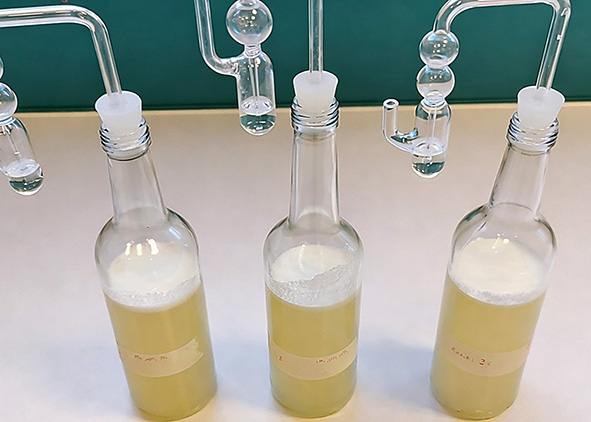
In Alpine regions such as South Tyrol, agro-industrial and agricultural activities generate large quantities of by-products whose current uses often fall short of their potential as secondary material resources. Collaboration between design, science, and technology promotes sustainable material innovation, and this interdisciplinary approach forms the basis of the present research. The study examines four by-products from the region’s dairy, brewing, fruit-distillation, and sheep-farming sectors, combining material, technological, and systemic perspectives. The preliminary findings identify concrete pathways for reintegrating these underused resources into local production chains, while also highlighting the regulatory, infrastructural, and economic constraints that currently limit their valorisation.
Article info
Received: 11/03/2026; Revised: 19/04/2026; Accepted: 24/04/2026
Downloads
Article Metrics Graph
References
Alexander, H. (2006), Die industrielle Entwicklung in Südtirol im 19. und 20 – Jahrhundert, Folio Verlag, Wien.
Anderson, C. (2012), Makers – The New Industrial Revolution, Crown Business, New York.
Ashby, M. F. (2013), Materials and the Environment – Eco-informed Material Choice, Butterworth-Heinemann, Amsterdam. [Online] Available at: doi.org/10.1016/C2010-0-66554-0 [Accessed 30 March 2026].
Ashby, M. F. and Johnson, K. (2014), Materials and Design – The Art and Science of Material Selection in Product Design, Butterworth-Heinemann, Oxford. [Online] Available at: doi.org/10.1016/C2011-0-05518-7 [Accessed 16 April 2026].
ASTAT (2025), Statistisches Jahrbuch für Südtirol | Annuario Statistico della Provincia di Bolzano, Bolzano. [Online] Available at: assets-eu-01.kc-usercontent.com/b5376750-8076-01cf-17d2-d343e29778a7/dcac2513-3b29-401d-a326-8c6e3632f1d9/JB2025%20-%20web.pdf [Accessed 30 March 2026].
Bailey, K. D. (1994), Typologies and Taxonomies – An Introduction to Classification Techniques, Sage Publications, Thousand Oaks.
Bak-Andersen, M. (2021), Reintroducing Materials for Sustainable Design – Design process and educational practice, Routledge, London.
Barbero, S. and Ferrulli, E. (2023), “Transizione ecologica e digitale – Il design Sistemico nei processi di innovazione aperta delle PMI | Ecological and digital transition – Systemic Design in SMEs open innovation processes”, in Agathón | International Journal of Architecture, Art and Design, vol. 13, pp. 269-280. [Online] Available at: doi.org/10.19229/2464-9309/13232023 [Accessed 16 April 2026].
Bettiol, M. and Micelli, S. (2014), “The hidden side of design – The relevance of artisanship”, in Design Issues, vol. 30, issue 1, pp. 7-18. [Online] Available at: doi.org/10.1162/DESI_a_00245 [Accessed 30 March 2026].
Boblin, S. L., Ireland, S., Kirkpatrick, H. and Robertson, K. (2013), “Using Stake’s qualitative case study approach to explore implementation of evidence-based practice”, in Qualitative Health Research, vol. 23, issue 9, pp. 1267-1275. [Online] Available at: doi.org/10.1177/1049732313502128 [Accessed 16 April 2026].
Booth, W. C., Colomb, G. G., Williams, J. M., Bizup, J. and FitzGerald, W. T. (2008), The Craft of Research, The University of Chicago Press, Chicago.
Bofylatos, S. (2022), “Upcycling Systems Design, Developing a Methodology through Design”, in Sustainability, vol. 14, issue 2, article 600, pp. 1-18. [Online] Available at: doi.org/10.3390/su14020600 [Accessed 16 April 2026].
Cole, J. W. and Wolf, E. R. (1999), The Hidden Frontier – Ecology and Ethnicity in an Alpine Valley, University of California Press, Berkeley.
D’Olivo, P. and Karana, E. (2021), “Materials Framing – A Case Study of Biodesign Companies’ Web Communications”, in She Ji | The Journal of Design, Economics, and Innovation, vol. 7, issue 3, pp. 403-434. [Online] Available at: doi.org/10.1016/j.sheji.2021.03.002 [Accessed 30 March 2026].
Driscoll, D. L. (2011), “Introduction to primary research – Observations, surveys, and interviews”, in Lowe, C. and Zemliansky, P. (eds), Writing spaces – Reading on writing – Vol. 2, Parlor Press, Anderson, pp. 153-174. [Online] Available at: wacclearinghouse.org/books/writingspaces2/writing-spaces-readings-on-writing-vol-2.pdf [Accessed 30 March 2026].
EMF – Ellen MacArthur Foundation (2025), What is the meaning of a circular economy and what are the main principles? [Online] Available at: ellenmacarthurfoundation.org/topics/circular-economy-introduction/overview [Accessed 30 March 2026].
European Parliament and Council of the European Union (2009), Regulation (EC) No 1069/2009 laying down health rules as regards animal by-products and derived products not intended for human consumption, document 32009R1069. [Online] Available at: eur-lex.europa.eu/legal-content/EN/LSU/?uri=celex%3A32009R1069 [Accessed 16 April 2026].
Fischer, C. (2019), “Agriculture and tourism sector linkages – Global relevance and local evidence for the case of South Tyrol”, in Open Agriculture, vol. 4, issue 1, pp. 544-553. [Online] Available at: doi.org/10.1515/opag-2019-0053 [Accessed 30 March 2026].
Gaddi, R. and Mastrolonardo, L. (2024), “Micro-reti locali per la transizione verde della filiera della lana | Local micro-networks for green transition of the wool supply chain”, in Agathón | International Journal of Architecture, Art and Design, vol. 15, pp. 344-353. [Online] Available at: doi.org/10.19229/2464-9309/15292024 [Accessed 16 April 2026].
Geissdoerfer, M., Pieroni, M. P. P., Pigosso, D. C. A. and Soufani, K. (2020), “Circular business models – A review”, in Journal of Cleaner Production, vol. 277, article 123741, pp. 1-17. [Online] Available at: doi.org/10.1016/j.jclepro.2020.123741 [Accessed 16 April 2026].
Gershenfeld, N. (2012), “How to Make Almost Anything – The Digital fabrication revolution”, in Foreign Affairs, vol. 91, issue 6, pp. 43-57. [Online] Available at: jstor.org/stable/41720933 [Accessed 30 March 2026].
Hofer, M., Hassan, M. and Mies, R. (2024), “The roles of makerspaces for facilitating open-source hardware development”, in Moritz, M., Redlich, T., Buxbaum-Conradi, S. and Wulfsberg, J. P. (eds), Global collaboration, local production – Fab City als Modell für Kreislaufwirtschaft und nachhaltige Entwicklung, Springer Gabler. [Online] Available at: doi.org/10.1007/978-3-658-44114-2_17 [Accessed 16 April 2026].
IRP – International Resource Panel (2019), Global Resources Outlook 2019 – Natural Resources for the Future We Want, United Nations Environment Programme, Nairobi. [Online] Available at: resourcepanel.org/reports/global-resources-outlook-2019 [Accessed 30 March 2026].
Jakob, D. and Thomas, N. J. (2017), “Firing up craft capital: the renaissance of craft and craft policy in the United Kingdom”, in International Journal of Cultural Policy, vol. 23, issue 4, pp. 495-511. [Online] Available at: doi.org/10.1080/10286632.2015.1068765 [Accessed 16 April 2026].
Karana, E., Barati, B., Rognoli, V. and Zeeuw van der Laan, A. (2015), “Material Driven Design (MDD) – A method to design for material experiences”, in International Journal of Design, vol. 9, issue 2, pp. 35-54. [Online] Available at: ijdesign.org/index.php/IJDesign/article/view/1965 [Accessed 30 March 2026].
Klein, J. T. (1990), Interdisciplinarity – History, theory and practice, Wayne State University Press, Detroit.
Knapp, L. (2022), “The ‘golden hoof’ – The regeneration of regional wools”, in Fields | Journal of Huddersfield Student Research, vol. 8, issue 1, pp. 1-13. [Online] Available at: doi.org/10.5920/fields.983 [Accessed 16 April 2026].
Maffei, S., Bolzan, P., Bianchini, M., Zeccara, F., Barbero, S., Campagnaro, C., Di Prima, N., Filippini, A., Puglielli, M., Rosato, L., Lotti, G. and Pontillo, G. (2024), “Svelare la complessità della transizione circolare per il settore del mobile imbottito | Unveiling the complexity of circular transition for the upholstered furniture sector”, in Agathón | International Journal of Architecture, Art and Design, vol. 16, pp. 304-313. [Online] Available at: doi.org/10.19229/2464-9309/16252024 [Accessed 16 April 2026].
Mallik, A. (2025), “Unveiling sustainability’s shadows through PESTEL analysis”, in Journal of Business, Ethics and Society, vol. 5, issue 2, pp. 1-21. [Online] Available at: doi.org/10.61781/5-2II2025/1bmlm [Accessed 16 April 2026].
Manzini, E. (2015), Design, When Everybody Designs – An Introduction to Design for Social Innovation, MIT Press, Cambridge.
Manzini, E. and Vezzoli, C. (2003), “A strategic design approach to develop sustainable product service systems – Examples taken from the ‘environmentally friendly innovation’ Italian prize”, in Journal of Cleaner Production, vol. 11, issue 8, pp. 851-857. [Online] Available at: doi.org/10.1016/S0959-6526(02)00153-1 [Accessed 30 March 2026].
Massari, S., Galli, F., Colombo, L. and Goretti, G. (2025), “Divinfood, NUCs e agrobiodiversità – Food Design Agile e Living Labs per l’innovazione sostenibile | Divinfood, NUCs and agrobiodiversity – Agile Food Design and Living Labs for sustainable innovation”, in Agathón | International Journal of Architecture, Art and Design, vol. 17, pp. 398-411. [Online] Available at: doi.org/10.69143/2464-9309/17282025 [Accessed 16 April 2026].
Morpurgo, E. (2024), “Biomateriali e zone umide – Filiere per l’edilizia e il tessile dalla valorizzazione di ecosistemi locali | Biomaterials and wetlands – Supply chains for construction and textiles through the enhancement of local ecosystems”, in Agathón | International Journal of Architecture, Art and Design, vol. 16, pp. 314-323. [Online] Available at: doi.org/10.19229/2464-9309/16262024 [Accessed 16 April 2026].
Olivastri, C. and Tagliasco, G. (2024), “Servizi per il riuso e il riparo – L’allestimento tra touchpoints e infrastrutture relazionali | Services for reuse and repair – The arrangement between touchpoints and relational infrastructures”, in Agathón | International Journal of Architecture, Art and Design, vol. 15, pp. 324-331. [Online] Available at: doi.org/ 10.19229/2464-9309/15272024 [Accessed 16 April 2026].
Parisi, S., Rognoli, V. and Sonneveld, M. (2017), “Material Tinkering – An inspirational approach for experiential learning and envisioning in product design education”, in The Design Journal | An International Journal for All Aspects of Design, vol. 20, issue supp. 1, pp. S1167-S1184. [Online] Available at: doi.org/10.1080/14606925.2017.1353059 [Accessed 30 March 2026].
Presidente della Repubblica Italiana (2016), “Legge 19 agosto 2016, n. 166 – Disposizioni concernenti la donazione e la distribuzione di prodotti alimentari e farmaceutici a fini di solidarietà sociale e per la limitazione degli sprechi (16G00179), in Gazzetta Ufficiale, Serie Generale n. 202 del 30/08/2016. [Online] Available at: gazzettaufficiale.it/eli/id/2016/08/30/16G00179/sg [Accessed 30 March 2026].
Provincia Autonoma di Bolzano (2024), Rifiuti Alto Adige – 2024. [Online] Available at: assets-eu-01.kc-usercontent.com/71daab00-137f-01d0-946b-d82e951fb8f4/865c0c62-9726-4634-baf0-4a87e9950b5b/Präsentation%20Abfalldaten%202024%20-%20Büroausgabe%20-%20Webseite%20ITA.pdf [Accessed 30 March 2026].
Rognoli, V. and Ayala-Garcia, C. (2021), “Defining the DIY-Materials approach”, in Pedgley, O., Rognoli, V. and Karana, E. (eds), Materials Experience 2 – Expanding Territories of Materials and Design, Butterworth-Heinemann, Oxford, pp. 227-258. [Online] Available at: doi.org/10.1016/B978-0-12-819244-3.00010-7 [Accessed 30 March 2026].
Rognoli, V., Bianchini, M., Maffei, S. and Karana, E. (2015), “DIY Materials”, in Materials and Design, vol. 86, pp. 692-702. [Online] Available at: doi.org/10.1016/j.matdes.2015.07.020 [Accessed 30 March 2026].
Santos Malaguti de Sousa, C., Queiroz Ferreira Barata, T., Dutra Profírio de Souza, C. and de Melo, F. G. (2023), “Urban Forest Management – Design-Driven Technology Pathways for the Valorization of Pruning Waste | Urban forests management – Design-driven technological routes for wood waste valuing”, in Agathón | International Journal of Architecture, Art and Design, vol. 13, pp. 291-300. [Online] Available at: doi.org/10.19229/2464-9309/13252023 [Accessed 16 April 2026].
Schneider, A. (2022), “Land’s Constraints and Possibilities – High-Altitude Farmers in the Eastern Alps”, in C&AFE | Culture, Agriculture, Food and Environment – The Journal of Culture & Agriculture, vol. 44, pp. 18-26. [Online] Available at: doi.org/10.1111/cuag.12287 [Accessed 30 March 2026].
Sennett, R. (2008), The Craftsman, Yale University Press, New Haven.
Tanenbaum, J. G., Williams, A. M., Desjardins, A. and Tanenbaum, K. (2013), “Democratizing technology – Pleasure, utility and expressiveness in DIY and maker practice”, in Bødker, S. Brewster, S., Baudisch, P., Beaudouin-Lafon, M. and Mackay, W. E. (eds), CHI 2013 – Conference Proceedings – The 31st Annual CHI Conference on Human Factors in Computing Systems, Paris, France, April 27-May 2, 2013, Association for Computing Machinery, New York, pp. 2603-2612. [Online] Available at: dl.acm.org/doi/abs/10.1145/2470654.2481360 [Accessed 30 March 2026].
Ulluwishewa, R. (2014), “Environmental Unsustainability”, in Spirituality and Sustainable Development, Palgrave Macmillan, London, pp. 103-114. [Online] Available at: doi.org/10.1057/9781137382764_9 [Accessed 30 March 2026].
UN – United Nations (2022), Calling for Sustainable Development Goals Stimulus Package, Secretary-General Warns Finance Forum Window to Prevent Climate Catastrophe ‘Is Fast Closing’. [Online] Available at: press.un.org/en/2022/sgsm21614.doc.htm [Accessed 30 March 2026].
UN – United Nations (2015), Transforming our world – The 2030 Agenda for Sustainable Development. [Online] Available at: sdgs.un.org/2030agenda 2481360 [Accessed 30 March 2026].
Vezzoli, C. and Manzini, E. (2018), Design for Environmental Sustainability, Springer, London. [Online] Available at: doi.org/10.1007/978-1-84800-163-3 [Accessed 30 March 2026].
Zamenopoulos, T. and Alexiou, K. (2018), Co-design as collaborative research, Bristol University and AHRC Connected Communities Programme. [Online] Available at: oro.open.ac.uk/58301/1/Co-Design_CCFoundationSeries_PUBLISHED.pdf [Accessed 30 March 2026].
Downloads
Published
How to Cite
Issue
Section
Categories
License
Copyright (c) 2026 Camilo Ayala-Garcia, Noa Ruth Paul, Laura Bordini, Mila Stepanovic, Nitzan Cohen

This work is licensed under a Creative Commons Attribution 4.0 International License.
This Journal is published under Creative Commons Attribution Licence 4.0 (CC-BY).
License scheme | Legal code
This License allows anyone to:
Share: copy and redistribute the material in any medium or format.
Adapt: remix, transform, and build upon the material for any purpose, even commercially.
Under the following terms
Attribution: Users must give appropriate credit, provide a link to the license, and indicate if changes were made; users may do so in any reasonable manner, but not in any way that suggests the licensor endorses them or their use.
No additional restrictions: Users may not apply legal terms or technological measures that legally restrict others from doing anything the license permits.
Notices
Users do not have to comply with the license for elements of the material in the public domain or where your use is permitted by an applicable exception or limitation.
No warranties are given. The license may not give users all of the permissions necessary for their intended use. For example, other rights such as publicity, privacy, or moral rights may limit how you use the material.