Adaptive reuse as territorial infrastructure for rural areas – Indicator-based evaluation of reuse in Moya (Spain)
DOI:
https://doi.org/10.69143/2464-9309/1972026Keywords:
adaptive reuse, rural depopulation, territorial infrastructure, governance model, settlement-scale evaluationAbstract
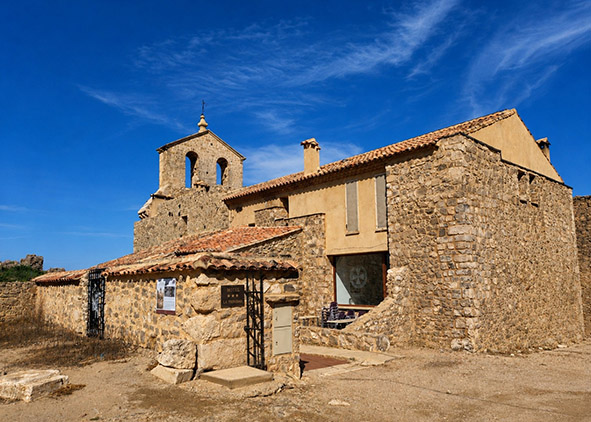
Across many European marginal rural territories, abandoned historic settlements are preserved as consolidated ruins, ensuring material continuity but generating limited socio-economic activation. This paper develops and applies a four-dimensional settlement-scale framework to evaluate implemented adaptive reuse as territorial infrastructure. Focusing on the reconstructed former Church of La Trinidad in Moya (Spain), the study assesses social activation, visitor flows in proportion to the resident population, governance continuity, and intervention strategy through verifiable indicators. The results show that adaptive reuse functions a regulated productive infrastructure aligned with Sustainable Development Goals 9 and 10, although its territorial impact depends on multi-scalar integration and long-term governance stability. The framework offers a transferable tool for post-implementation evaluation in depopulating rural contexts.
Article info
Received: 10/03/2026; Revised: 08/04/2026; Accepted: 10/04/2026
Downloads
Article Metrics Graph
References
Ajò, G. (2020), “I centri storici del Subappennino Dauno – Un patrimonio in pericolo tra abbandono e sottovalutazione del rischio sismico | The historical centres of the Dauno Subappenine area – A heritage in danger through abandonment and underestimation of seismic risk”, in ArcHistoR, vol. 7, pp. 1655-1677. [Online] Available at: doi.org/10.14633/ahr288 [Accessed 20 March 2026].
Alfaro Rodríguez, A., Biel, M. P. and Gutiérrez, D. (2016), “Virtual reconstruction applied to the recovery and heritage disclosure of the old village of Belchite”, in Lerma, J. L. and Cabrelles, M. (eds), 8th International Congress on Archaeology, Computer Graphics, Cultural Heritage and Innovation – Advanced 3D Documentation, Modelling and Reconstruction of Cultural Heritage, Monuments and Sites, Universitat Politècnica de València, Valencia, September 5-7, 2016, Editorial Universitat Politècnica de València, València, pp. 231-237. [Online] Available at: doi.org/10.4995/arqueologica8.2016.4175 [Accessed 20 March 2026].
Arfa, F. H., Zijlstra, H., Lubelli, B. and Quist, W. (2022), “Adaptive reuse of heritage buildings – From a literature review to a model of practice”, in The Historic Environment | Policy & Practice, vol. 13, issue 2, pp. 148-170. [Online] Available at: doi.org/10.1080/17567505.2022.2058551 [Accessed 20 March 2026].
Augustiniok, N., Houbart, C., Plevoets, B. and Van Cleempoel, K. (2025), “Adaptive reuse of built heritage – Conserving and designing with values”, in Journal of Cultural Heritage Management and Sustainable Development, vol. 15, issue 1, pp. 24-41. [Online] Available at: doi.org/10.1108/JCHMSD-05-2023-0068 [Accessed 20 March 2026].
Baiani, S., Altamura, P., Turchetti, G. and Romano, G. (2024), “Transizione energetica e circolare del patrimonio industriale – Il caso dell’ex SNIA a Roma | Energy and circular transition of the industrial heritage – The Ex SNIA case in Rome”, in Agathón | International Journal of Architecture, Art and Design, vol. 15, pp. 190-203. [Online] Available at: doi.org/10.19229/2464-9309/15152024 [Accessed 20 March 2026].
Barelles-Vicente, E., Torner-Feltrer, M. E., Llinares Millán, J. and Aparicio-Fernández, C. (2025), “From ruin to resource – The role of heritage and structural rehabilitation in the economic and territorial regeneration of rural areas”, in Land, vol. 14, issue 9, article 1765, pp. 1-21. [Online] Available at: doi.org/10.3390/land14091765 [Accessed 20 March 2026].
Bizzarri, C. and Micera, R. (2021), “The valorization of Italian borghi as a tool for the tourism development of rural areas”, in Sustainability, vol. 13, issue 12, article 6643, pp. 1-20. [Online] Available at: doi.org/10.3390/su13126643 [Accessed 20 March 2026].
Bogliolo, C. (2019), Bussana Vecchia – Rifunzionalizzare il borgo per una valorizzazione a scopo turistico, Tesi di Laurea, Università di Pavia, Italia. [Online] Available at: unitesi.unipv.it/handle/20.500.14239/11572 [Accessed 20 March 2026].
BOE – Boletín Oficial del Estado (1982), Real Decreto 2726/1982, de 3 de septiembre, por el que se declara conjunto histórico-artístico la villa de Moya (Cuenca). [Online] Available at: boe.es/boe/dias/1982/11/02/pdfs/A30165-30165.pdf [Accessed 20 March 2026].
Brignoni, M., Dall’Osso, G., Gasparotto, S. and Varini, R. (2023), “Mappatura dei processi design-driven per la rigenerazione delle piccole città fortificate in aree interne | Mapping design-driven processes for the regeneration of small fortified towns in inland areas”, in Agathón | International Journal of Architecture, Art and Design, vol. 13, pp. 281-290. [Online] Available at: doi.org/10.19229/2464-9309/13242023 [Accessed 20 March 2026].
Campisi, M. T. (2020), “Depopulation of small urban centers – Cultural landscape as a resource for local communities”, in Tucci, F. and Sposito, C. (eds), Resilience Between Mitigation and Adaptation, vol. 3, pp. 38-53. [Online] Available at: doi.org/10.19229/978-88-5509-096-4/322020 [Accessed 20 March 2026].
Carocci, C. F., Cannizzaro, F., Cocina, S., Di Martino, A., Finocchiaro, R., Impollonia, N., Macca, V., Terrana, A. and Tocci, C. (2023), “Preservation of abandoned historic centres – The case of Poggioreale antica (Sicily)”, in Land, vol. 12, issue 7, article 1376, pp. 1-16. [Online] Available at: doi.org/10.3390/land12071376 [Accessed 20 March 2026].
Casanovas, X., Alonso Campanero, J. A. and Campisi, T. (2024), “Patrimonio culturale e transizione energetica – Una lezione dal passato | Cultural heritage and energy transition – A lesson from the past”, in Agathón | International Journal of Architecture, Art and Design, vol. 15, pp. 58-69. [Online] Available at: doi.org/10.19229/2464-9309/1542024 [Accessed 20 March 2026].
Cimadomo, G., Lecardane, R. and Torregrossa, P. M. (2025), “Agenda 2030 per un turismo sostenibile – Il Cammino di Santiago de Compostela e la Trasversale Sicula | 2030 Agenda for sustainable tourism – The Way of Santiago de Compostela and the Ancient Trasversale Sicula”, in Agathón | International Journal of Architecture, Art and Design, vol. 17, pp. 80-93. [Online] Available at: doi.org/10.69143/2464-9309/1742025 [Accessed 20 March 2026].
Council of Europe (2005), Framework Convention on the Value of Cultural Heritage for Society (Faro Convention), Faro. [Online] Available at: coe.int/en/web/culture-and-heritage/faro-convention [Accessed 20 March 2026].
Diputación Provincial de Cuenca (n.d.), Plan de Mejora de Infraestructuras Turísticas de la Provincia de Cuenca (PLAMIT). [Online] Available at: dipucuenca.es/plamit [Accessed 20 March 2026].
Eixerés Ros, J. (2025), “Habitat collettivi per la rigenerazione rurale – Una cooperativa edilizia ad Almenara (Spagna) | Collective habitats for rural regeneration – A housing cooperative in Almenara (Spain)”, in Agathón | International Journal of Architecture, Art and Design, vol. 18, pp. 238-249. [Online] Available at: doi.org/10.69143/2464-9309/18132025 [Accessed 20 March 2026].
ESPON (2017), Shrinking Rural Regions in Europe – Towards Smart and Innovative Approaches to Regional Development Challenges in Depopulating Rural Regions. [Online] Available at: espon.eu/shrinking-rural-regions [Accessed 20 March 2026].
Fiorani, D. (2015), “Castelvecchio Calvisio – The global meaning of a case study”, in Crisan, R., Fiorani, D., Kealy, L. and Musso, S. F. (eds), Conservation-Reconstruction – Small Historic Centres Conservation in the Midst of Change, EAAE, Hasselt (Belgium), vol. 64, pp. 3-21. [Online] Available at: researchgate.net/publication/276836904 [Accessed 20 March 2026].
Fiorini, L., Saganeiti, L., Perazzini, M., Bontempo, D., Bucci, M., Giancola, M. and Perilli, E. (2025), “L’impatto dei modelli urbani sul supporto sociale – Tra giustizia spaziale e sviluppo sostenibile | The impact of urban models on social support – Between spatial justice and sustainable development”, in Agathón | International Journal of Architecture, Art and Design, vol. 17, pp. 196-207. [Online] Available at: doi.org/10.69143/2464-9309/17132025 [Accessed 20 March 2026].
Fonti, R. (2024), “Patrimonio per un futuro sostenibile – Il principio teorico della reversibilità e i suoi riflessi in architettura | Heritage for a sustainable future – The theoretical principle of reversibility and its reflections on architecture”, in Agathón | International Journal of Architecture, Art and Design, vol. 16, pp. 144-155. [Online] Available at: doi.org/10.19229/2464-9309/16122024 [Accessed 20 March 2026].
Foster, G. (2020), “Circular economy strategies for adaptive reuse of cultural heritage buildings to reduce environmental impacts”, in Resources, Conservation and Recycling, vol. 152, article 104507, pp. 1-14. [Online] Available at: doi.org/10.1016/j.resconrec.2019.104507 [Accessed 20 March 2026].
Hussein, F. and Alhebsi, K. (2025), “Adaptive Re-Use of Cultural Heritage Sites – A Strategy for Circular Economy”, in Sustainability, vol. 17, issue 14, article 6403, pp. 1-17. [Online] Available at: doi.org/10.3390/su17146403 [Accessed 20 March 2026].
INE – Instituto Nacional de Estadística (n.d.), Cifras oficiales de población resultantes de la revisión del padrón municipal a 1 de enero – Resumen por provincias. [Online] Available at: ine.es/jaxiT3/Datos.htm?t=2913#_tabs-tabla [Accessed 20 March 2026].
Ivona, A., Rinella, A., Rinella, F., Epifani, F. and Nocco, S. (2021), “Resilient rural areas and tourism development paths – A comparison of case studies”, in Sustainability, vol. 13, issue 6, article 3022, pp. 1-22. [Online] Available at: doi.org/10.3390/su13063022 [Accessed 20 March 2026].
Khalil, I. and Üzümcüoğlu, D. (2025), “Preserving heritage through a novel framework for the adaptive reuse of Mediterranean earthen houses”, in Vitruvio | International Journal of Architectural Technology and Sustainability, vol. 10, issue 1, pp. 1-16. [Online] Available at: doi.org/10.4995/vitruvio-ijats.2025.23308 [Accessed 20 March 2026].
Lak, A., Gheitasi, M. and Timothy, D. J. (2020), “Urban regeneration through heritage tourism – Cultural policies and strategic management”, in Journal of Tourism and Cultural Change, vol. 18, issue 4, pp. 386-403. [Online] Available at: doi.org/10.1080/14766825.2019.1668002 [Accessed 20 March 2026].
Mısırlısoy, D. and Günçe, K. (2016), “Adaptive reuse strategies for heritage buildings – A holistic approach”, in Sustainable cities and society, vol. 26, pp. 91-98. [Online] Available at: doi.org/10.1016/j.scs.2016.05.017 [Accessed 20 March 2026].
Ministerio para la Transición Ecológica y el Reto Demográfico (n.d.), “Programa de Recuperación y Utilización Educativa de Pueblos Abandonados (PRUEPA)”, in miteco.gob.es. [Online] Available at: miteco.gob.es/es/ceneam/programas-de-educacion-ambiental/pueblos-educativos/pruepa-como-surgio.html [Accessed 20 March 2026].
Musso, S. F. and Franco, G. (2025), “Reconstruct to Reinhabit – New Life for an Abandoned and Ruined Medieval Village in Italy”, in Buildings, vol. 15, issue 8, article 1231, pp. 1-25. [Online] Available at: doi.org/10.3390/buildings15081231 [Accessed 20 March 2026].
Pinilla, V. and Sáez, L. A. (2021), “What do public policies teach us about rural depopulation – The case study of Spain”, in European Countryside, vol. 13, issue 2, pp. 330-351. [Online] Available at: doi.org/10.2478/euco-2021-0021 [Accessed 20 March 2026].
Pinilla, V. and Sáez, L. A. (2017), “Rural depopulation in Spain – Genesis of a problem and innovative policies”, in Informes CEDDAR, 2017-2, pp. 1-23. [Online] Available at: roldedeestudiosaragoneses.org/wp-content/uploads/Informes-2017-2-Informe-SSPA1_2017_2_EN-GB.pdf [Accessed 20 March 2026].
Pintossi, N., Kaya, D. I., van Wesemael, P. and Roders, A. P. (2023), “Challenges of cultural heritage adaptive reuse – A stakeholders-based comparative study in three European cities”, in Habitat International, vol. 136, article 102807, pp. 1-16. [Online] Available at: doi.org/10.1016/j.habitatint.2023.102807 [Accessed 20 March 2026].
Pla-Bañuls, J. and Esparcia, J. (2024), “Properly addressing rural shrinking? – Overview of territorially unbalanced support programmes in Spain”, in Regional Studies, Regional Science, vol. 11, issue 1, pp. 660-663. [Online] Available at: doi.org/10.1080/21681376.2024.2405175 [Accessed 20 March 2026].
Plevoets, B. and Van Cleempoel, K. (2019), Adaptive reuse of the built heritage – Concepts and cases of an emerging discipline, Routledge, London. [Online] Available at: doi.org/10.4324/9781315161440 [Accessed 20 March 2026].
Proietti, A. (2024), “Regeneración de pueblos históricos entre acciones materiales e inmateriales | Regeneration of historic hamlets between material and immaterial actions”, in REIA | Revista Europea de Investigación en Arquitectura, vol. 24, pp. 44-54. [Online] Available at: doi.org/10.64197/REIA.24.975 [Accessed 20 March 2026].
Rudan, E. (2023), “Circular economy of cultural heritage – Possibility to create a new tourism product through adaptive reuse”, in Journal of Risk and Financial Management, vol. 16, issue 3, article 196, pp. 1-12. [Online] Available at: doi.org/10.3390/jrfm16030196 [Accessed 20 March 2026].
Saleh, R. and Ost, C. (2024), “Circular Business Model for Cultural Heritage Adaptive Reuse – An Iterative Journey”, in Fusco Girard, L. and Gravagnuolo, A. (eds), Adaptive Reuse of Cultural Heritage – Circular Business, Financial and Governance Models, pp. 433-461, Springer, Cham. [Online] Available at: doi.org/10.1007/978-3-031-67628-4_16 [Accessed 20 March 2026].
Saleh, R. and Ost, C. (2023), “Innovative business model for adaptive reuse of cultural heritage in a circular economy perspective”, in International Journal of Entrepreneurship and Small Business, vol. 48, issue 1, pp. 39-77. [Online] Available at: doi.org/10.1504/IJESB.2023.10053086 [Accessed 20 March 2026].
Sorbo, E., Moretto, T., Grandi, S. and Modena, G. (2025), “Identità culturali e sviluppo sostenibile – Un modello metodologico per l’Arsenale di Venezia | Cultural identity and sustainable development – A methodological model for the Venetian Arsenal”, in Agathón | International Journal of Architecture, Art and Design, vol. 17, pp. 130-145. [Online] Available at: doi.org/10.69143/2464-9309/1782025 [Accessed 20 March 2026].
Tao, R., Chen, P. and Aoki, N. (2025), “Conceptual changes and controversies in rural historical building relocation in China under the heritage adaptive reuse discourse”, in Built Heritage, vol. 9, issue 1, article 6, pp. 1-16. [Online] Available at: doi.org/10.1186/s43238-024-00172-x [Accessed 20 March 2026].
Throsby, D. (2019), “Heritage economics – Coming to terms with value and valuation”, in Avrami, E., Macdonald, S., Mason, R. and Myers, D. (eds), Values in Heritage Management – Emerging Approaches and Research Directions, The Getty Conservation Institute, Los Angeles, pp. 199-209. [Online] Available at: getty.edu/publications/virtuallibrary/pdf/9781606066195.pdf#page=213 [Accessed 20 March 2026].
Toscano, V. (2023), “Cultural Heritage and Sustainable Development – How Does Accounting Matter?”, in Accounting for Cultural Heritage Management – Resilience, Sustainability and Accountability, Palgrave Macmillan, Cham, pp. 85-135. [Online] Available at: doi.org/10.1007/978-3-031-38257-4_4 [Accessed 20 March 2026].
UNESCO (2023), Operational Guidelines for the Implementation of the World Heritage Convention. [Online] Available at: whc.unesco.org/en/guidelines/ [Accessed 20 March 2026].
Downloads
Published
How to Cite
Issue
Section
Categories
License
Copyright (c) 2026 Emma Barelles-Vicente, Maria Eugenia Torner-Feltrer, Jaime Llinares Millán, Inmaculada Oliver-Faubel

This work is licensed under a Creative Commons Attribution 4.0 International License.
This Journal is published under Creative Commons Attribution Licence 4.0 (CC-BY).
License scheme | Legal code
This License allows anyone to:
Share: copy and redistribute the material in any medium or format.
Adapt: remix, transform, and build upon the material for any purpose, even commercially.
Under the following terms
Attribution: Users must give appropriate credit, provide a link to the license, and indicate if changes were made; users may do so in any reasonable manner, but not in any way that suggests the licensor endorses them or their use.
No additional restrictions: Users may not apply legal terms or technological measures that legally restrict others from doing anything the license permits.
Notices
Users do not have to comply with the license for elements of the material in the public domain or where your use is permitted by an applicable exception or limitation.
No warranties are given. The license may not give users all of the permissions necessary for their intended use. For example, other rights such as publicity, privacy, or moral rights may limit how you use the material.