Borghi as care infrastructures – A metaproject for Alzheimer’s disease in inland areas
DOI:
https://doi.org/10.69143/2464-9309/1962026Keywords:
borghi regeneration, environments for people with Alzheimer’s disease, proximity welfare, healthcare architecture, evidence-based designAbstract
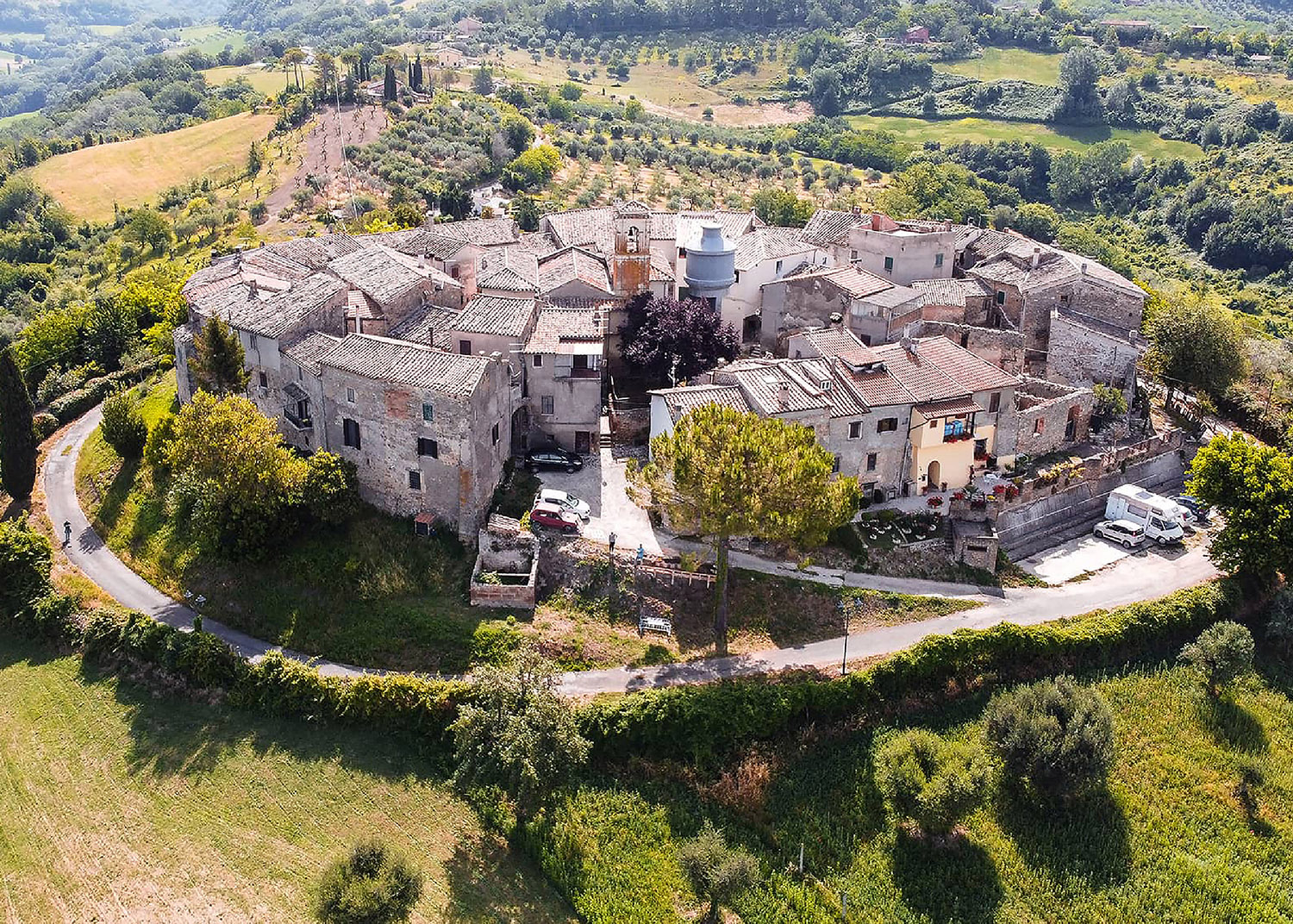
This paper investigates the potential of depopulating ‘borghi’ to function as territorial care infrastructures for people with Alzheimer’s disease in the early stages. It addresses population ageing, inequalities in access to healthcare services, and the need to reuse underutilised built heritage, while contributing to the sustainable regeneration of inland areas and to the well-being of local communities. The study aims to verify the transferability of innovative residential models for dementia to small-scale settlements. It adopts an analytical-comparative approach based on case studies, integrating an environmental-behavioural model with evidence-based design to identify recurring spatial and organisational patterns. These results are translated into meta-design criteria for distributed socio-care facilities, which are subsequently applied to Borgo di Cicignano (RI).
Article info
Received: 15/03/2026; Revised: 16/04/2026; Accepted: 20/04/2026
Downloads
Article Metrics Graph
References
Amodio, T. (2021), “Una lettura della marginalità attraverso lo spopolamento e l’abbandono nei piccoli comuni | A reading of marginality through depopulation and abandonment in small municipalities”, in Bollettino della Associazione Italiana di Cartografia, vol. 172, pp. 50-65. [Online] Available at: doi.org/10.13137/2282-572X/33544 [Accessed 10 April 2026].
Attaianese, E., Barilà, M. and Perillo, M. (2025), “Exploring Neuroscientific Approaches to Architecture – Design Strategies of the Built Environment for Improving Human Performance”, in Buildings, vol. 15, issue 19, article 3524. [Online] Available at: doi.org/10.3390/buildings15193524 [Accessed 14 April 2026].
Barbera, F., Cersonimo, D. and De Rossi, A. (2022), Contro i borghi – Il Belpaese che dimentica i paesi, Donzelli, Roma.
Baró Zarzo, J.-L., Poyatos Sebastián, J. and Martínez Martínez, N. (2020), “Contrastare lo spopolamento nell’entroterra della Spagna – Proposte tra Arte, Design e Architettura | Fighting against depopulation in inland Spain – Alternatives from Art, Design and Architecture”, in Agathón | International Journal of Architecture Art and Design, vol. 8, pp. 138-147. [Online] Available at: doi.org/10.19229/2464-9309/8132020 [Accessed 10 April 2026].
Battaino, C., Fossati, P. and Marconi, F. (2025), “Ripensare l’abitare – Progetto e architettura per un abitare flessibile e accessibile | Rethinking housing – Design and architecture for flexible and affordable living”, in Agathón | International Journal of Architecture, Art and Design, vol. 17, pp. 156-167. [Online] Available at: doi.org/10.69143/2464-9309/17102025 [Accessed 10 April 2026].
Bottero, M. and Datola, G. (2020), “Addressing social sustainability in urban regeneration processes – An application of the social multi-criteria evaluation”, in Sustainability, vol. 12, issue 18, article 7579, pp. 1-20. [Online] Available at: doi.org/10.3390/su12187579 [Accessed 10 April 2026].
Brignoni, M., Dall’Osso, G., Gasparotto, S. and Varini, R. (2023), “Mappatura dei processi design-driven per la rigenerazione delle piccole città fortificate in aree interne | Mapping design-driven processes for the regeneration of small fortified towns in inland areas”, in Agathón | International Journal of Architecture, Art and Design, vol. 13, pp. 281-290. [Online] Available at: doi.org/10.19229/2464-9309/13242023 [Accessed 10 April 2026].
Carrosio, G. (2019), I margini al centro – L’Italia delle aree interne tra fragilità e innovazione, Donzelli, Roma.
Chaza Chimeno, M. R., Revellini, R. and Cellucci, C. (2024), “Invecchiamento della popolazione e spazi urbani – Nuove sfide digitali per il benessere degli anziani | Ageing population and urban spaces – New digital challenges for elderly well-being”, in Agathón | International Journal of Architecture, Art and Design, vol. 16, pp. 98-107. [Online] Available at: doi.org/10.19229/2464-9309/1682024 [Accessed 10 April 2026].
Chen, L.-M., Lee, Y., Nguyen, D., Choi, S. D. (2025), “Technology that supports extending dementia-friendly community-based care – A scoping review”, in Current Geriatrics Reports, vol. 14, article 21, pp. 1-24. [Online] Available at: doi.org/10.1007/s13670-025-00446-x [Accessed 10 April 2026].
Coleman, R. (1994), “The Case for Inclusive Design – An Overview”, in International Ergonomics Association (eds), Proceedings of the 12th Triennial Congress International Ergonomics Association and the Human Factors Association of Canada, Toronto, Canada, August 15-19, 1994, Human Factors Association of Canada, Toronto, pp. 1-6. [Online] Available at: it.scribd.com/document/712869947/THE-CASE-FOR-INCLUSIVE-DESIGN [Accessed 10 April 2026].
Day, K., Carreon, D. and Stump, C. (2000), “The therapeutic design of environments for people with dementia – A review of the empirical research”, in The Gerontologist, vol. 40, issue 4, pp. 397-416. [Online] Available at: doi.org/10.1093/geront/40.4.397 [Accessed 10 April 2026].
De Boer, B., Beerens, H. C., Katterbach, M. A., Viduka, M., Willemse, B. M. and Verbeek, H. (2018), “The physical environment of nursing homes for people with dementia – Traditional nursing homes, small-scale living facilities, and green care farms”, in Healthcare, vol. 6, issue 4, article 137, pp. 1-12. [Online] Available at: doi.org/10.3390/healthcare6040137 [Accessed 10 April 2026].
Del Nord, R. (2002), Architettura per l’Alzheimer – Il malato di Alzheimer e l’ambiente, Regione Toscana, Firenze. [Online] Available at: regione.toscana.it/documents/10180/23556/Architettura+per+l%27Alzheimer+-+Volume+Primo/854f10d7-9c59-4a94-8d38-91ff98d3cc6c?version=1.0 [Accessed 10 April 2026].
Fazeli Dehkordi, Z. S., Khatami, S. M. and Ranjbar, E. (2022), “The Associations between urban form and major non-communicable diseases – A systematic review”, in Journal of Urban Health, vol. 99, pp. 941-958. [Online] Available at: doi.org/10.1007/s11524-022-00652-4 [Accessed 10 April 2026].
Fiorini, L., Saganeiti, L., Perazzini, M., Bontempo, D., Bucci, M., Giancola, M. and Perilli, E. (2025), “L’impatto dei modelli urbani sul supporto sociale – Tra giustizia spaziale e sviluppo sostenibile | The impact of urban models on social support – Between spatial justice and sustainable development”, in Agathón | International Journal of Architecture, Art and Design, vol. 17, pp. 196-207. [Online] Available at: doi.org/10.69143/2464-9309/17132025 [Accessed 10 April 2026].
Fleming, R., Bennett, K., Preece, T. and Phillipson, L. (2017), “The development and testing of the dementia friendly communities environment assessment tool (DFC EAT)”, in International Psychogeriatrics, vol. 29, issue 2, pp. 303-311. [Online] Available at: doi.org/10.1017/S1041610216001678 [Accessed 10 April 2026].
Gan, D. R. Y., Chaudhury, H., Mann, J. and Wister, A. V. (2022), “Dementia-Friendly Neighborhood and the Built Environment – A Scoping Review”, in The Gerontologist, vol. 62, issue 6, pp. e340–e356. [Online] Available at: doi.org/10.1093/geront/gnab019 [Accessed 14 April 2026].
Ghamari, M., Suvish, Dehkordi, A. A., See, C. H., Sami, A., Yu, H. and Sundaram, S. (2025), “Dementia Friendly Buildings – Approach on Architectures”, in Buildings, vol. 15, article 385, pp. 1-37. [Online] Available at: doi.org/10.3390/buildings15030385 [Accessed 14 April 2026].
Hillier, B. (2007), Space is the machine – A configurational theory of architecture, Space Syntax, London. [Online] Available at: discovery.ucl.ac.uk/id/eprint/3881/1/SITM.pdf [Accessed 10 April 2026].
Istituto Superiore di Sanità (2024), Progetto Fondo per l’Alzheimer e le demenze – Le attività dell’Osservatorio demenze dell’Istituto Superiore di Sanità (anni 2021-2023) – Report Nazionale, Istituto Superiore di Sanità, Roma. [Online] Available at: demenze.it/documenti/schede/report_nazionale.pdf [Accessed 10 April 2026].
Krier, D., de Boer, B., Hiligsmann, M, Wittwer, J. and Amieva, H. (2023), “Evaluation of dementia-friendly initiatives, small-scale homelike residential care, and dementia village models – A scoping review”, in JAMDA | Journal of the American Medical Directors Association, vol. 24, issue 7, pp. 1020-1027. [Online] Available at: doi.org/10.1016/j.jamda.2023.03.024 [Accessed 10 April 2026].
Long, S., Benoist, C. and Weidner, W. (2023), World Alzheimer Report 2023 – Reducing dementia risk – Never too early, never too late, Alzheimer’s Disease International, London (UK). [Online] Available at: alzint.org/u/World-Alzheimer-Report-2023.pdf [Accessed 10 April 2026].
Marquardt, G. and Schmieg, P. (2009), “Dementia-friendly architecture – Environments that facilitate wayfinding in nursing homes”, in American Journal of Alzheimer’s Disease & Other Dementias, vol. 24, issue 4, pp. 333-340. [Online] Available at: doi.org/10.1177/1533317509334959 [Accessed 10 April 2026].
Marquardt, G., Bueter, K. and Motzek, T. (2014), “Impact of the design of the built environment on people with dementia – An evidence-based review”, in HERD | Health Environments Research & Design Journal, vol. 8, issue 1, pp. 127-157. [Online] Available at: doi.org/10.1177/193758671400800111 [Accessed 10 April 2026].
Ministero della Salute (2022), “Decreto 23 maggio 2022, n. 77 – Regolamento recante la definizione di modelli e standard per lo sviluppo dell’assistenza territoriale nel Servizio sanitario nazionale”, in Gazzetta Ufficiale, Serie Generale, n. 144 del 22/06/2022. [Online] Available at: gazzettaufficiale.it/eli/id/2022/06/22/22G00085/SG [Accessed 14 April 2026].
Piazzoni, C. and Terraneo, M. (2025), “Le disuguaglianze territoriali di salute in Italia”, in Perocco, F. and Pirina. G. (eds), Le disuguaglianze territoriali in Italia – Cause, forme, conseguenze, Edizioni Ca’ Foscari – Venice University Press, Venezia, pp. 143-161. [Online] Available at: doi.org/10.30687/978-88-6969-991-7/005 [Accessed 10 April 2026].
Pollo, R., Biolchini, E. and Scognamiglio, V. (2023), “Progettare le Case della Comunità – Applicazione dell’approccio modulare a un modello innovativo di presidio | Designing Community Houses – Application of the modular approach to an innovative model of facility”, in Agathón | International Journal of Architecture, Art and Design, vol. 14, pp. 224-235. [Online] Available at: doi.org/10.19229/2464-9309/14192023 [Accessed 10 April 2026].
Preiser, W. F. E. and Ostroff, E. (2001), Universal Design handbook, McGraw-Hill, New York.
Presidenza del Consiglio dei Ministri – Dipartimento per le politiche di coesione e per il Sud (2021), Evoluzione del requisito associativo nella Strategia Nazionale per le Aree Interne – Linee Guida 2021-2027, Roma. [Online] Available at: politichecoesione.governo.it/media/k1ahol2s/4_evoluzione-del-requisito-associativo-nella-snai-linee-guida-2021-2027.pdf [Accessed 10 April 2026].
Quesada-García, S., Valero-Flores, P. and Lozano-Gómez, M. (2024), “Residential care facilities for users with Alzheimer’s disease – Characterisation of their architectural typology”, in Buildings, vol. 14, issue 10, article 3307, pp. 1-45. [Online] Available at: doi.org/10.3390/buildings14103307 [Accessed 10 April 2026].
Rao, M., Prasad, S., Tissera, H. and Adshead, F. (2007), “The built environment and health”, in The Lancet, vol. 370, issue 9593, pp. 1111-1113. [Online] Available at: doi.org/10.1016/S0140-6736(07)61260-4 [Accessed 10 April 2026].
Ricci, M., Battisti, A. and Monardo, B. (2014), I borghi della salute – Healthy ageing per nuovi progetti di territorio, Alinea, Firenze.
Ricci, L., Poli, I. and Marino, M. (2025), “Welfare urbano e rigenerazione – Sostenibilità e inclusione sociale per il raggiungimento degli SDG | Urban welfare and regeneration – Sustainability and social inclusion for achieving the SDGs”, in Agathón | International Journal of Architecture, Art and Design, vol. 17, pp. 94-107. [Online] Available at: doi.org/10.69143/2464-9309/1752025 [Accessed 10 April 2026].
Setola, N. and Borgianni, S. (2025), “Promuovere salute e benessere – Strumenti per il progetto di Case della Comunità e quartieri sani | Promoting health and well-being – Tools for designing community health centres and healthy neighbourhoods”, in Agathón | International Journal of Architecture, Art and Design, vol. 17, pp. 226-241. [Online] Available at: doi.org/10.69143/2464-9309/17152025 [Accessed 10 April 2026].
Spadolini, M. B. and Parodi, L. (2025), “La forma segue l’emozione – Progettazione su misura e design rigenerativo negli ambienti di cura | Form follows emotion – Tailored design and regenerative approaches in healthcare environments”, in Agathón | International Journal of Architecture, Art and Design, vol. 17, pp. 68-79. [Online] Available at: doi.org/10.69143/2464-9309/1732025 [Accessed 10 April 2026].
Ulrich, R. S. (1984), “View through a window may influence recovery from surgery”, in Science, vol. 224, issue 4647, pp. 420-421. [Online] Available at: doi.org/10.1126/science.6143402 [Accessed 14 April 2026]
Ulrich, R. S., Berry, L. L., Quan, X. and Parish, J. T. (2010), “A conceptual framework for the domain of Evidence-based design”, in HERD | Health Environments Research & Design Journal, vol. 4, issue 1, pp. 95-114. [Online] Available at: doi.org/10.1177/193758671000400107 [Accessed 10 April 2026].
UN – United Nations (2015), Transforming our World – The 2030 Agenda for Sustainable Development, document A/RES/70/1. [Online] Available at: sustainabledevelopment.un.org/index.php?page=viewandtype=111andnr=8496andmenu=35 [Accessed 14 April 2026].
UNI – Ente Italiano di Normazione (1981), UNI 8289:1981 – Building – Functional requirements of final users – Classification. [Online] Available at: store.uni.com/en/uni-8289-1981 [Accessed 10 April 2026].
Verbeek, H., van Rossum, E., Zwakhalen, S. M. G., Kempen, G. I. J. M. and Hamers, J. P. H. (2009), “Small, homelike care environments for older people with dementia – A literature review”, in International Psychogeriatrics, vol. 21, issue 2, pp. 252-264. [Online] Available at: doi.org/10.1017/S104161020800820X [Accessed 10 April 2026].
WHO – World Health Organization (2021), Global status report on the public health response to dementia. [Online] Available at: iris.who.int/server/api/core/bitstreams/9e8aab50-ca34-45e0-9fb0-26e675746f65/content [Accessed 10 April 2026].
Zeisel, J., Hyde, J. and Levkoff, S. (1994), “Best practices – An Environment Behavior (E-B) model for Alzheimer special care units”, in American Journal of Alzheimer’s Care and Related Disorders & Research, vol. 9, issue 2, pp. 4-21. [Online] Available at: doi.org/10.1177/153331759400900202 [Accessed 10 April 2026].
Downloads
Published
How to Cite
Issue
Section
Categories
License
Copyright (c) 2026 Teresa Villani, Anna Mezzalana

This work is licensed under a Creative Commons Attribution 4.0 International License.
This Journal is published under Creative Commons Attribution Licence 4.0 (CC-BY).
License scheme | Legal code
This License allows anyone to:
Share: copy and redistribute the material in any medium or format.
Adapt: remix, transform, and build upon the material for any purpose, even commercially.
Under the following terms
Attribution: Users must give appropriate credit, provide a link to the license, and indicate if changes were made; users may do so in any reasonable manner, but not in any way that suggests the licensor endorses them or their use.
No additional restrictions: Users may not apply legal terms or technological measures that legally restrict others from doing anything the license permits.
Notices
Users do not have to comply with the license for elements of the material in the public domain or where your use is permitted by an applicable exception or limitation.
No warranties are given. The license may not give users all of the permissions necessary for their intended use. For example, other rights such as publicity, privacy, or moral rights may limit how you use the material.