Infrastructure between sustainability and necessity – Environmental design and a trans-scalar approach
DOI:
https://doi.org/10.69143/2464-9309/1922026Keywords:
sustainable infrastructure, environmental design, trans-scalar approach, green and blue infrastructure, ecosystem servicesAbstract
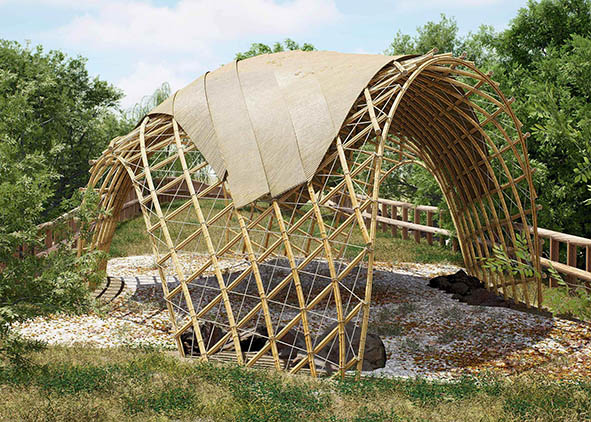
The contribution interprets Sustainable Development Goal no. 9 as an opportunity to rethink territorial infrastructuring processes beyond the mono-functional and sectoral model of grey infrastructure. Starting from the theoretical framework of Technological and Environmental Design, the essay proposes a trans-scalar and performance-based reading of infrastructure, understood not only as technical work but also as a device capable of producing services, ecosystem values, and social benefits over the medium- to long-term. The reflection is developed through three experiences in Italy: the new PTCP of the Province of Lodi, in which socio-economic values are related to ecosystem values; the Guidelines for the environmental and social quality of interventions developed by the Agenzia del Demanio, oriented towards assessment throughout the life cycle; and the experimentation with ‘Arundo donax’ in the Saline di Priolo Oriented Nature Reserve, which turns an invasive species into a resource for lightweight and reversible infrastructure. The results highlight the need to move from a logic of technical possibility to a culture of design necessity, capable of orienting multifunctional, verifiable, and transferable infrastructural choices.
Article info
Received: 02/03/2026; Revised: 18/05/2026; Accepted: 21/05/2026
Downloads
Article Metrics Graph
References
Agenzia del Demanio (2023), Linee guida per la qualità ambientale e sociale degli interventi – versione marzo 2023, documento interno.
Ahmed, S. R. and Capuano, A. (2025), “Infrastrutture blu per la rigenerazione ecologica – Il recupero di siti estrattivi ad Amburgo e Roma | Blue infrastructures for ecological regeneration – The recovery of mining sites in Hamburg and Rome”, in Agathón | International Journal of Architecture, Art and Design, vol. 18, pp. 84-97. [Online] Available at: doi.org/10.69143/2464-9309/1832025 [Accessed 29 March 2026].
Alini, L, Foti, E. and Musumeci, R. E. (2025), “Waterfront Siracusa – Infrastrutture verdi e restauro costiero | Green infrastructure and coastal restoration – The Siracusa waterfront”, in Losasso, M. and Romano, R. (ed.), Progettazione Ambientale, sfide globali, scenari di ricerca – Contributi alla ricerca del cluster Progettazione Ambientale della Società Italiana della Tecnologia dell’Architettura | Environmental Design, global challenges, research scenarios – Contributions to research of the Environmental Design Cluster of the Italian Society of Architectural Technology, Maggioli Editore, Santarcangelo di Romagna, pp. 122-127. [Online] Available at: doi.org/10.30448/UNI.916.72445 [Accessed 29 March 2026].
Alini, L. and Martino, A. (2023), “Progettare la sostenibilità – Metodi e strategie di valutazione ambientale | Designing sustainability – Environmental assessment methods and strategies”, in Techne | Journal of Technology for Architecture and Environment, vol. 26, pp. 267-275. [Online] Available at: doi.org/10.36253/techne-15289 [Accessed 29 March 2026].
Angelucci, F. and Shatvoryan, A. (2025), “Riconnettere le dimensioni di acqua, città e comunità – Una sperimentazione a Yerevan (Armenia) | Reconnecting the dimensions of water, city, and community – An experiment in Yerevan (Armenia)”, in Agathón | International Journal of Architecture, Art and Design, vol. 18, pp. 162-177. [Online] Available at: doi.org/10.69143/2464-9309/1882025 [Accessed 29 March 2026].
Baiani, S., Altamura, P., Turchetti, G. and Romano, G. (2024), “Transizione energetica e circolare del patrimonio industriale – Il caso dell’ex SNIA a Roma | Energy and circular transition of the industrial heritage – The Ex SNIA case in Rome”, in Agathón | International Journal of Architecture, Art and Design, vol. 15, pp. 190-203. [Online] Available at: doi.org/10.19229/2464-9309/15152024 [Accessed 29 March 2026].
Battisti, L., Cuomo, F. and Manganelli, A. (2025), “Collaborative governance arrangements – What makes nature-based solutions endure?” in Territory, Politics, Governance, vol. 13, issue 10, pp. 1421-1441. [Online] Available at: doi.org/10.1080/21622671.2024.2355317 [Accessed 29 March 2026].
D’Ambrosio, V., Rigillo, M. and Tersigni, E. (eds) (2021), Transizioni – Conoscenza e progetto climate proof, CLEAN, Napoli.
Dessì, V., Clementi, M., Labrozzi, E., Oppimitti, F., D’Ostuni, M., Soh, C. B., Chien, S. C. and Ang, B. T. W. (2025), “Agricoltura urbana e architettura – L’acqua per ottimizzare la sinergia edificio-vegetazione | Urban agriculture and architecture – Water for optimising the building-vegetation synergies”, in Agathón | International Journal of Architecture, Art and Design, vol. 18, pp. 224-237. [Online] Available at: doi.org/10.69143/2464-9309/18122025 [Accessed 29 March 2026].
Fanzini, D., Tartaglia, A. and Riva, R. (eds) (2019), Projects challenges – Sustainable development and urban resilience, Maggioli Editore, Santarcangelo di Romagna. [Online] Available at: theplan.it/eng/politecnica-university-press/project-challenges-sustainable-development-and-urban-resilience [Accessed 29 March 2026].
Freitas Netto, S. V., Sobral, M. F. F., Ribeiro, A. R. B. and da Luz Soares, G. R. (2020), “Concepts and forms of greenwashing: a systematic review”, in Environmental Sciences Europe, vol. 32, issue 19, pp. 1-12. [Online] Available at: doi.org/10.1186/s12302-020-0300-3 [Accessed 29 March 2026].
Grabowski, Z. J., McPhearson, T. and Pickett, S. T. A. (2023), “Transforming US urban green infrastructure planning to address equity”, in Landscape and Urban Planning, volume 229, article 104591, pp. 1-12. [Online] Available at: doi.org/10.1016/j.landurbplan.2022.104591 [Accessed 29 March 2026].
Greco, S., Maraldi, M. and Molari, L. (2023) “Grading bamboo through four-point bending tests – A report on six species of Italian bamboo”, in Construction and Building Materials, vol. 404, article 133168, pp. 1-10. [Online] Available at: doi.org/10.1016/j.conbuildmat.2023.133168 [Accessed 29 March 2026].
Greco, S., Molari, L., Valdrè, G. and Garcia, J. J. (2024), “Multilevel analysis of six species of Phyllostachys bamboo and Arundo donax – Preliminary survey on Italian grown stands”, in Wood Science and Technology, vol. 58, pp. 1025-1049. [Online] Available at: doi.org/10.1007/s00226-024-01547-0 [Accessed 29 March 2026].
Ingaramo, R., Negrello, M., Khachatourian Saradehi, l. and Khachatourian Saradhi, A. (2023), “Il progetto transcalare delle nature-based solutions per l’Agenda 2030 – Innovazioni e interconnessioni | Transcalar project of nature-based solutions for the 2030 Agenda – Innovations and interconnections”, in Agathón | International Journal of Architecture, Art and Design, vol. 13, pp. 97-108. [Online] Available at: doi.org/10.19229/2464-9309/1382023 [Accessed 29 March 2026].
Lecardane, R. (2023), “Natura Capitale – Transizione ecologica e fenomeni di trasformazione dello spazio aperto | Nature Capital – An ecological transition and open space transformation phenomena”, in Agathón | International Journal of Architecture, Art and Design, vol. 13, pp. 119-130. [Online] Available at: doi.org/10.19229/2464-9309/13102023 [Accessed 29 March 2026].
Molari, L., Coppolino, F. S. and García, J. J. (2021), “Arundo donax – A widespread plant with great potential as sustainable structural material”, in Construction and Building Materials, vol. 268, article 121143, pp. 1-14. [Online] Available at: doi.org/10.1016/j.conbuildmat.2020.121143 [Accessed 29 March 2026].
Moscatelli, M. and Raffa, A. (2023), “Infrastrutture verdi in contesti aridi urbani – Ecologie in transizione oltre il Green Riyadh | Green infrastructure in arid urban contexts – Transitioning ecologies beyond Green Riyadh”, in Agathón | International Journal of Architecture, Art and Design, vol. 13, pp. 75-86. [Online] Available at: doi.org/10.19229/2464-9309/1362023 [Accessed 29 March 2026].
Mussinelli, E., Tartaglia, A., Bisogni, L. and Malcevschi, S. (2018), “Il ruolo delle Nature-Based Solutions nel progetto architettonico e urbano | The role of Nature-Based Solutions in architectural and urban design”, in Techne | Journal of Technology for Architecture and Environment, vol. 15, pp. 116-123. [Online] Available at: doi.org/10.13128/Techne-22112 [Accessed 29 March 2026].
Pastero, L. (2023), “Mineralizzazione della CO2 – Processi naturali ed applicazioni all’industria e all’ambiente”, in Oberti, R. (ed.), Scienze e materiali mineralogici per uno sviluppo sostenibile, Accademia delle Scienze di Torino, Torino, pp. 159-177. [Online] Available at: accademiadellescienze.it/media/cafcc55c-7ecd-45fb-a0f5-2229daff0499 [Accessed 29 March 2026].
Pirina, C., Comi, G. and d’Abramo, V. (2024), “Per una transizione progettuale – Composizione e progetto del verde per la città contemporanea | For a design transition – Green composition and design for the contemporary city”, in Agathón | International Journal of Architecture, Art and Design, vol. 15, pp. 124-137. [Online] Available at: doi.org/10.19229/2464-9309/1592024 [Accessed 29 March 2026].
Settis, S. (2011), Paesaggio Costituzione cemento – La battaglia per l'ambiente contro il degrado civile, Einaudi, Torino.
Sposito, C. and Mittersteiner, G. (2025), “Riciclo idrico e raffrescamento urbano – Un nuovo paradigma metabolico Acqua / Energia / Cibo per le città temperate | Water recycling and urban cooling – A new Water / Energy / Food metabolic paradigm for temperate cities”, in Agathón | International Journal of Architecture, Art and Design, vol. 18, pp. 22-71. [Online] Available at: doi.org/10.69143/2464-9309/1812025 [Accessed 29 March 2026].
Tartaglia, A., Babudri, M., Salucci, F., Pacini, R. and Sereni, A. (2024), “Strumenti integrati per la promozione e il controllo della qualità del progetto | Integrated tools for quality promotion and project control”, in Techne | Journal of Technology for Architecture and Environment, vol. 27, pp. 167-176. [Online] Available at: doi.org/10.36253/techne-15129 [Accessed 29 March 2026].
Tesoriere, Z. (2023), “Architettura, custode della natura – Il progetto di suolo nella trasformazione delle autostrade urbane, 1962-2018 | Architecture, the guardian of nature – The project of the ground within the transformation of urban highways, 1962-2018”, in Agathón | International Journal of Architecture, Art and Design, vol. 13, pp. 87-96. [Online] Available at: doi.org/10.19229/2464-9309/1372023 [Accessed 29 March 2026].
Torricelli, M. C. (2025), Introduzione alla progettazione tecnologica ambientale dell’architettura, Laterza, Roma.
UN – United Nations (2020), The Sustainable Development Goals Report 2020, United Nations, New York. [Online] Available at: unstats.un.org/sdgs/report/2020/The-Sustainable-Development-Goals-Report-2020.pdf [Accessed 29 March 2026].
UNOPS (2020), Infrastructure for Peacebuilding – The role of infrastructure in tackling the underlying drivers of fragility. [Online] Available at: content.unops.org/publications/Infrastructure_Peacebuilding_EN_Web.pdf [Accessed 29 March 2026].
Valente, R., Mozingo, L. A., Bosco, R. and Giacobbe, S. (2024), “Gestione integrata delle risorse naturali in contesti urbani sostenibili | Integrated natural resource management in sustainable urban context”, in Agathón | International Journal of Architecture, Art and Design, vol. 15, pp. 180-189. [Online] Available at: doi.org/10.19229/2464-9309/15142024 [Accessed 29 March 2026].
World Commission on Environment and Development (1987), Report of the World Commission on Environment and Development – Our common future, Oxford University Press, Oxford. [Online] Available at: digitallibrary.un.org/record/139811?v=pdf [Accessed 29 March 2026].
Downloads
Published
How to Cite
Issue
Section
Categories
License
Copyright (c) 2026 Andrea Tartaglia, Luigi Alini

This work is licensed under a Creative Commons Attribution 4.0 International License.
This Journal is published under Creative Commons Attribution Licence 4.0 (CC-BY).
License scheme | Legal code
This License allows anyone to:
Share: copy and redistribute the material in any medium or format.
Adapt: remix, transform, and build upon the material for any purpose, even commercially.
Under the following terms
Attribution: Users must give appropriate credit, provide a link to the license, and indicate if changes were made; users may do so in any reasonable manner, but not in any way that suggests the licensor endorses them or their use.
No additional restrictions: Users may not apply legal terms or technological measures that legally restrict others from doing anything the license permits.
Notices
Users do not have to comply with the license for elements of the material in the public domain or where your use is permitted by an applicable exception or limitation.
No warranties are given. The license may not give users all of the permissions necessary for their intended use. For example, other rights such as publicity, privacy, or moral rights may limit how you use the material.